What is the anchor MSC, and how does GSM handle handoff between different MSCs?
The anchor MSC is the first MSC visited during the call — the call stays routed through it forever, and as the mobile moves on, new MSCs are simply chained onto the end.
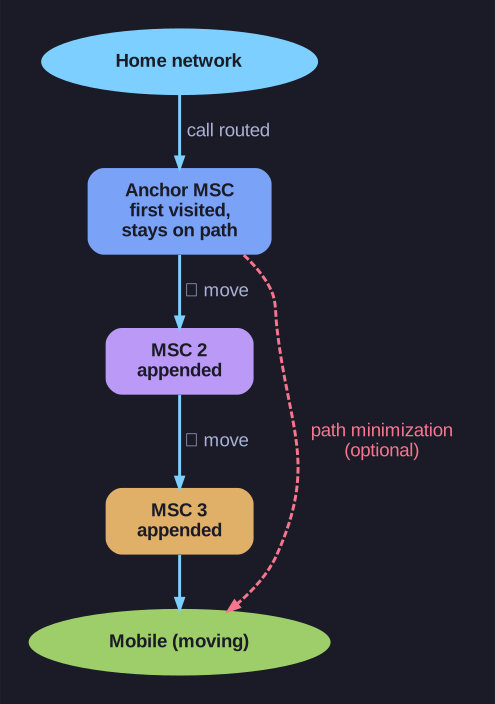
* Anchor-MSC chaining: the first MSC stays; new MSCs are appended. *
How inter-MSC handoff works:
- Anchor MSC = the first MSC the call went through. The call remains routed through the anchor MSC for its entire duration
- When the mobile moves into the area of another MSC, the new MSC is added to the end of the MSC chain
- Moving again? Another link is appended — the call path grows into a chain: home → anchor → MSC → MSC → …
- An optional path minimization step can shorten a long multi-MSC chain
Why a chain instead of re-routing? Re-routing the entire call from scratch mid-conversation is risky and slow; appending a leg to the existing path is simple and fast. The price is an increasingly inefficient route — which is exactly what path minimization optionally repairs.
Tip: The anchor MSC is the call-duration analogue of the home network: a stable point that absorbs mobility. GSM solves "the subscriber moved before the call" with the HLR, and "the subscriber moves during the call" with the anchor MSC chain.
Go deeper:
 Network switching subsystem (Wikipedia) — the MSC/GMSC roles and inter-MSC coordination behind the anchor-MSC chaining model.