What is the availability heuristic, and how does it skew our sense of how likely things are?
We judge how common or probable something is by how easily examples spring to mind — so vivid, recent or emotional events feel far more frequent than they are.
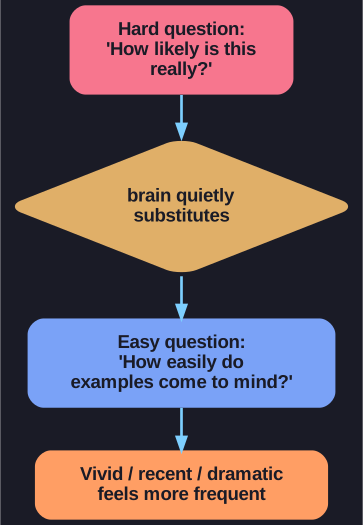
* A hard question ('how likely, really?') is quietly swapped for an easy one ('how easily do examples come to mind?'). *
The mechanism is a substitution: the real question ("how likely is this?") is hard, so the brain quietly swaps in an easier one ("how easily can I recall an example?"). Things that are dramatic, recent or heavily reported are more memorable, not more frequent — but memorability gets mistaken for frequency.
Example: After seeing news coverage of a plane crash, many people overestimate the danger of flying and feel safer driving — even though driving is statistically far more dangerous per mile. The crash is unforgettable; the millions of safe flights are invisible.
Tip: When something feels alarmingly common, ask whether it's actually frequent or merely memorable. Base rates beat headlines.
Go deeper:
 Wikipedia — Availability heuristic — Tversky & Kahneman's original work and later studies.