What is the Avalanche Effect in block ciphers?
The Avalanche Effect means that a tiny change in the input (flipping one bit of plaintext or key) causes a dramatic, unpredictable change in the output — ideally about 50% of output bits flip.
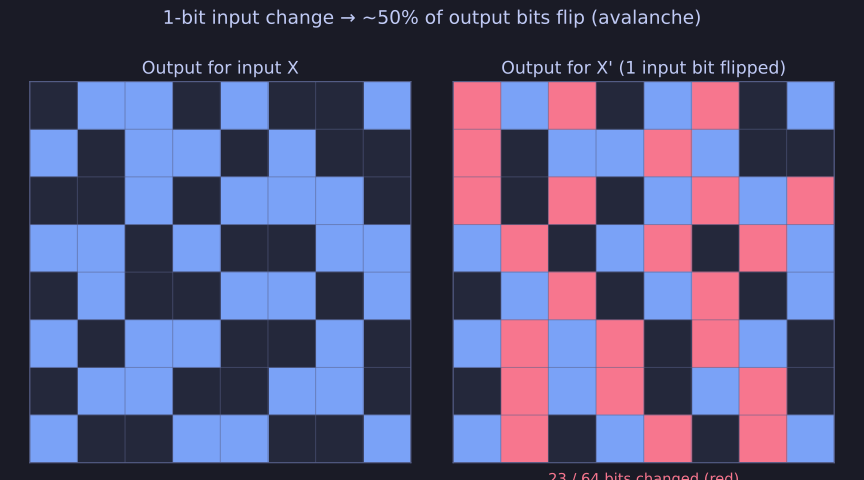
* One flipped input bit flips about half the output bits, with no visible pattern. *
It is essentially diffusion made measurable — the visible symptom that the cipher is mixing its input bits thoroughly. A cipher that fails it produces similar ciphertexts for similar inputs, and those correlations are exactly the foothold a cryptanalyst uses, so avalanche is one of the first things designers test for.
Formal definition: If one input bit is flipped, each output bit should flip with probability 0.5 (approximately half the output bits change).
Strict Avalanche Criterion (SAC):
- A stronger version: flipping any single input bit must cause each output bit to flip with exactly probability 1/2
- SAC implies the avalanche effect, but not vice versa
Why it matters:
- Without it, an attacker could find correlations between input and output
- Similar plaintexts would produce similar ciphertexts, leaking information
- It ensures that the cipher's output appears random
Example: Changing one bit in a 128-bit AES input changes roughly 64 output bits — with no predictable pattern about which bits change.
Go deeper:
 Avalanche effect (Wikipedia) — the effect and the stricter Strict Avalanche Criterion.