What is the bystander effect?
The more people are present during an emergency, the less likely any single person is to step in and help.
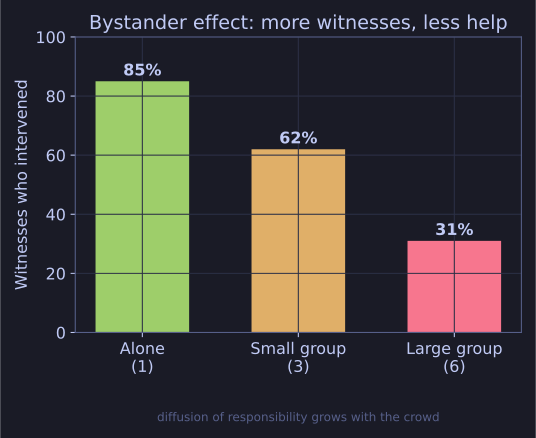
* Darley & Latane (1968): the more witnesses present, the smaller each person's felt responsibility to act. *
The mechanism is diffusion of responsibility: when many witnesses are around, each one assumes someone else will act (or has already), so personal responsibility is spread so thin that no one acts. People also look to the crowd for cues — and if everyone is hesitating, each reads that hesitation as a sign nothing is really wrong.
Example: Someone collapses on a busy street. In a crowd of fifty, each person assumes another will call for help, and the collapse goes unattended longer than it would have on a quiet street with a single passer-by who knows it's down to them.
Tip: If you need help in a crowd, defeat the diffusion by pointing at one person: "You, in the red jacket — call an ambulance." Naming a specific person reassigns the responsibility.
Go deeper:
 Wikipedia — Bystander effect — diffusion of responsibility and the Kitty Genovese story.