What is the Client-Server Model in the application layer?
A model where one device (the client) requests information and another (the server) responds; the application layer protocol defines the format of those requests and replies.
The client-server model is the dominant pattern for network services because it centralizes the data and the work: many clients share one authoritative server, which makes storage, backup, and access control easy to manage in one place. Both ends are application-layer processes — a browser and a web server, a mail client and a mail server — and the application-layer protocol (HTTP, SMTP, and so on) is essentially the agreed grammar for those requests and responses, which is why the two ends must implement the same protocol to understand each other.
Client-Server Model:
A network architecture where processes are divided into client and server roles.
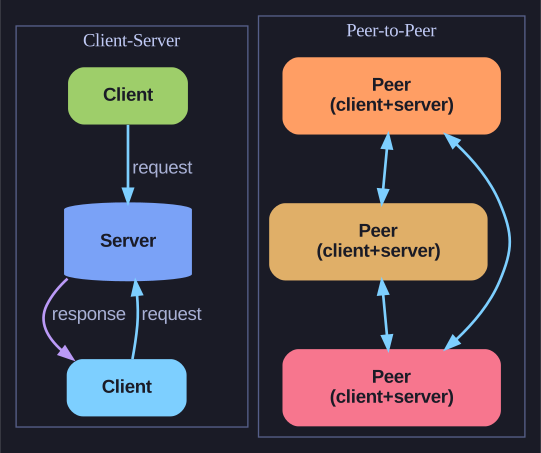
* Client-server: clients request, a dedicated server responds. Peer-to-peer: every peer is both client and server. *
Definitions:
- Client: The device requesting information
- Server: The device responding to the request
Key characteristics:
- Client and server processes are considered to be in the application layer
- Application layer protocols describe the format of requests and responses between clients and servers
- Both devices must implement compatible protocols
Example:
Client                          Server
  │                               │
  │──── Request (GET page) ─────→│
  │                               │
  │←──── Response (HTML) ─────────│
Common client-server applications: Web browsing, email, file sharing
Go deeper:
-
 Client Server and Peer to Peer Networks — animated contrast of the two architectures.
 -
 Client–server model (Wikipedia) — the request-response pattern and centralized servers.