What is the complete data path for a UMTS voice call vs. a data session?
Voice follows the circuit-switched path through MSC to the PSTN; data follows the packet-switched path through SGSN/GGSN to the internet — both start from the same UE and UTRAN.
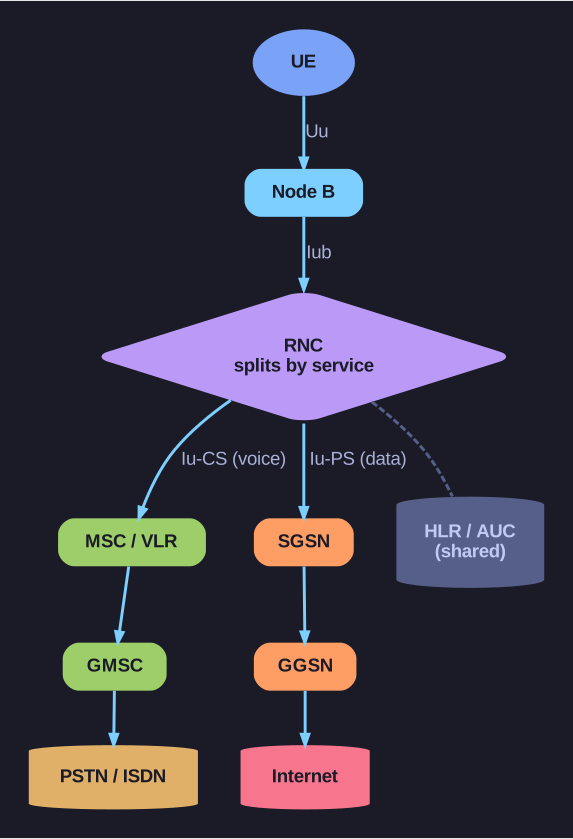
* Voice via Iu-CS to the PSTN, data via Iu-PS to the Internet. *
Voice call path (circuit-switched):
UE → (Uu) → Node B → (Iub) → RNC → (Iu-CS) → MSC/VLR → GMSC → PSTN/ISDN
                                                   ↑
                                               HLR/AUC
Data session path (packet-switched):
UE → (Uu) → Node B → (Iub) → RNC → (Iu-PS) → SGSN → GGSN → Internet
                                                  ↑
                                              HLR/AUC
Notice the split happens at the Iu interface:
- Iu-CS connects the RNC to the circuit-switched core (MSC)
- Iu-PS connects the RNC to the packet-switched core (SGSN)
- The RNC decides which domain to use based on the type of service requested
Simultaneous use: A UMTS phone can have an active voice call (CS domain) AND a data session (PS domain) at the same time — something that was impossible in basic GSM. You could browse the web while on a phone call. This was a major selling point of 3G.
Signaling: Both paths also involve signaling networks for session setup, authentication, and mobility management — but the user data itself follows the two CS/PS paths described here.
Go deeper:
 3G UMTS Network Architecture (Electronics Notes) — splits the core into CS (MSC/GMSC, voice) and PS (SGSN/GGSN, data), including the shared HLR/AUC.
- Circuit switching (Wikipedia) — why the voice path is circuit-switched versus the best-effort packet path.