Quiz Entry - updated: 2026.07.30
What is the difference between a DoS attack and a DDoS attack?
A DoS comes from one source; a DDoS is coordinated from many sources (a botnet of zombies), making it far harder to mitigate.
Both a DoS (Denial of Service) and a DDoS (Distributed Denial of Service) attack pursue the same goal — flooding a target with traffic or requests until it can no longer serve legitimate users — but they differ in scale and, crucially, in how hard they are to stop:
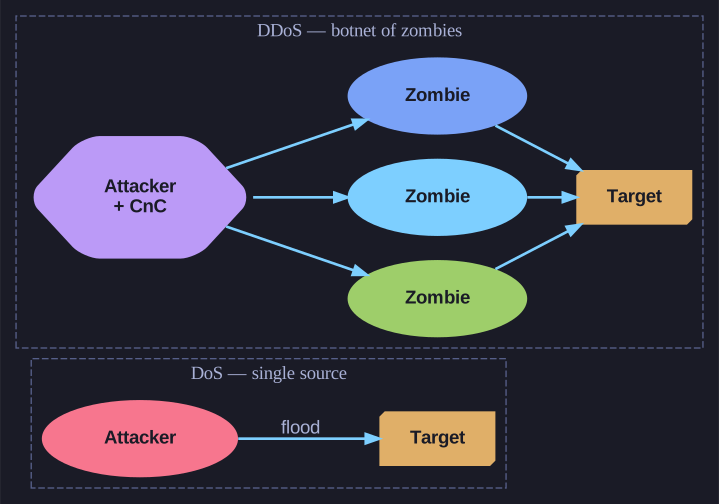
* A DoS has one source you can block; a DDoS spreads the flood across a botnet, so there is no single IP to stop. *
DoS (Denial of Service):
- Originates from a single source
- Prevents authorised users from using a service by consuming its system resources (bandwidth, CPU, memory)
- Relatively simple to conduct — but also easy to defend against, since you can just block the one offending source
DDoS (Distributed Denial of Service):
- Originates from many coordinated sources at once
- Uses a botnet — a network of malware-infected hosts called "zombies"
- The attacker steers the zombies with Command and Control (CnC) software
- Much harder to mitigate: there is no single IP address to block, and the combined traffic can dwarf the victim's capacity
Go deeper:
 DDoS Attack Explained — PowerCert Animated Videos — short animation showing how malware-recruited zombies form a botnet that floods a target.
 Denial-of-service attack — Wikipedia — covers attack methods, amplification, and why distributed attacks resist mitigation.