What is the difference between a "simple" and a "complex" Auskunft (information request), and what are they used for?
A simple Auskunft returns directory/IP-type lookups (IMEI, user info, IP connections, phone numbers); a complex Auskunft returns documents like ID copies and contract data. They are typically preparatory requests that link a device, SIM, or number to a real person.
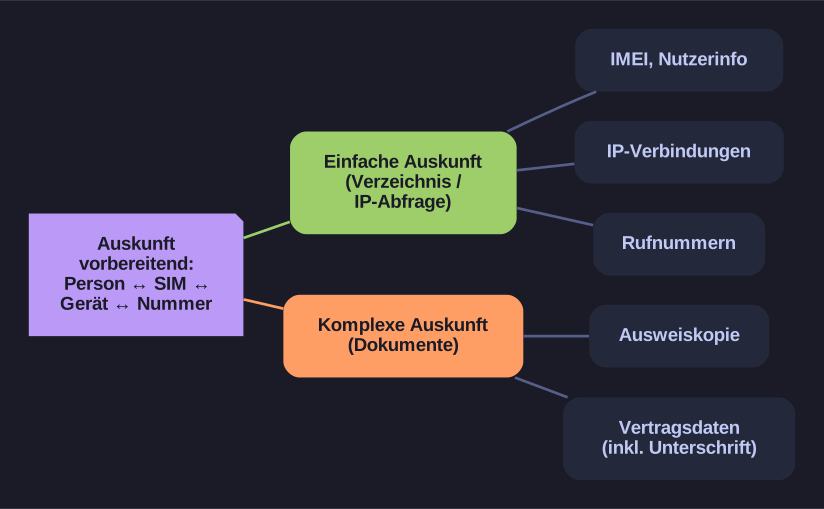
* Einfache vs. komplexe Auskunft als vorbereitende Massnahme. *
A simple Auskunft is a basic lookup: phone-book and IP queries returning information about an IMEI (the device's serial number), user information, IP connections, phone numbers, and the like. A complex Auskunft reaches for the deeper records held by the provider — copies of the identity document used to buy a SIM, and contract data including the signature on the contract. The complex variant takes more effort, so it is the smaller share of requests.
In practice these answer ownership-and-linkage questions:
- Who owns a found device or SIM?
- Which devices does a particular person have?
- Who acquired a given SIM, and with which identity document?
- In which devices (by IMEI) was a particular SIM (by IMSI) used?
The recurring theme is connecting a piece of telecom identity to a real person.
The key role of an Auskunft is preparation. It does not surveil ongoing communication; it establishes the identities and links — person ↔ SIM ↔ device ↔ number — that more intrusive measures later build on. Before you can wiretap "the suspect's phone," you first have to establish which number and device are actually the suspect's, and that groundwork is exactly what an Auskunft does.
Tip: Auskunft = "who/what is this?" — static identity resolution, the foundation step before any dynamic surveillance.
Go deeper:
 Dienst ÜPF — surveillance statistics (li.admin.ch) — distinguishes simple (basic subscriber) vs complex (detailed records) requests, with annual volumes.
- IMEI (Wikipedia) — the IMEI (device) vs IMSI (SIM/subscriber) distinction identity requests turn on.