Quiz Entry - updated: 2026.07.30
What is the difference between a virus and a worm?
A virus needs a user action and a host file to spread; a worm self-replicates and spreads across networks on its own.
Key difference: How they spread
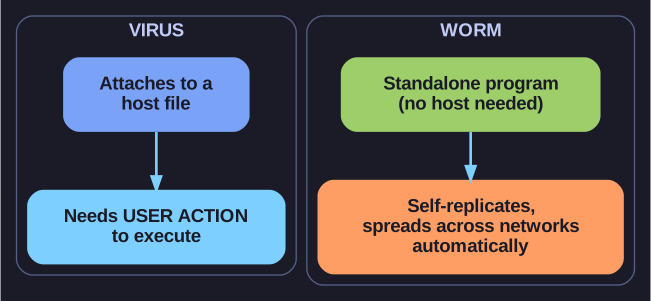
* A virus rides a host file and needs you to run it; a worm is standalone and spreads across networks by itself. *
| Malware | Spread Method |
|---|---|
| Virus | Requires user action (opening file, running program) |
| Worm | Self-replicating, spreads automatically across networks |
Virus:
- Attaches to legitimate files
- Needs a "host" to execute
- Example: Infected email attachment
Worm:
- Standalone program
- Exploits network vulnerabilities
- Can spread without user interaction
- Example: WannaCry, SQL Slammer
Memory tip: A virus needs you to "catch it" (user action); a worm crawls on its own.
Go deeper:
 Computer worm (Wikipedia) — self-replicating, host-free, spreads across networks autonomously.
- Computer virus (Wikipedia) — the contrast: needs a host program and user action to execute.
- NIST glossary: worm — crisp authoritative line: self-replicates without a host program or user intervention.