What is the difference between an autonomous AP and a controller-based (lightweight) AP, and how does a lightweight AP work with a WLC?
An autonomous AP (Access Point) is self-contained and configured individually; a controller-based AP — a "lightweight AP" (LAP) — holds no standalone config and tunnels everything to a central Wireless LAN Controller (WLC) that configures and manages every AP automatically. That central control is what makes large deployments practical.
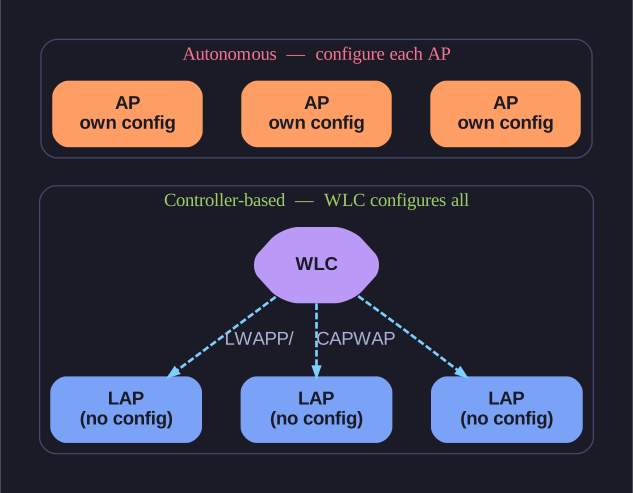
* Autonomous = configure each AP; controller-based = the WLC configures them all. *
As a network grows from one or two APs to dozens or hundreds, configuring each one by hand becomes unworkable. The controller-based model splits the AP's job in two:
- Autonomous AP — the full configuration (SSID, security, channel, power) lives in each AP. Fine for one or two; painful and error-prone at scale.
- Lightweight AP (LAP) — a "thin" radio that just relays frames; the brains live on the WLC. A LAP needs no initial configuration — when it powers on it discovers the WLC and downloads its settings, so adding an AP is zero-touch and the WLC auto-configures it.
- LWAPP — the Lightweight Access Point Protocol is the tunnel a LAP uses to talk to the WLC (the modern standardised successor is CAPWAP).
So the WLC is the single place you define a WLAN (Wireless Local Area Network) once and push it to every AP, and where you monitor them all.
Go deeper:
 CAPWAP (Wikipedia) — the standard, LWAPP-derived protocol a controller uses to manage its wireless termination points (APs).
- RFC 5415 — CAPWAP Protocol Specification — the primary spec defining how an Access Controller provisions and controls its APs.