Quiz Entry - updated: 2026.07.30
What is the difference between anonymisation and pseudonymisation?
Pseudonymisation replaces identifiers with a reversible key; anonymisation removes identifiability for good. Anonymity > pseudonymity.
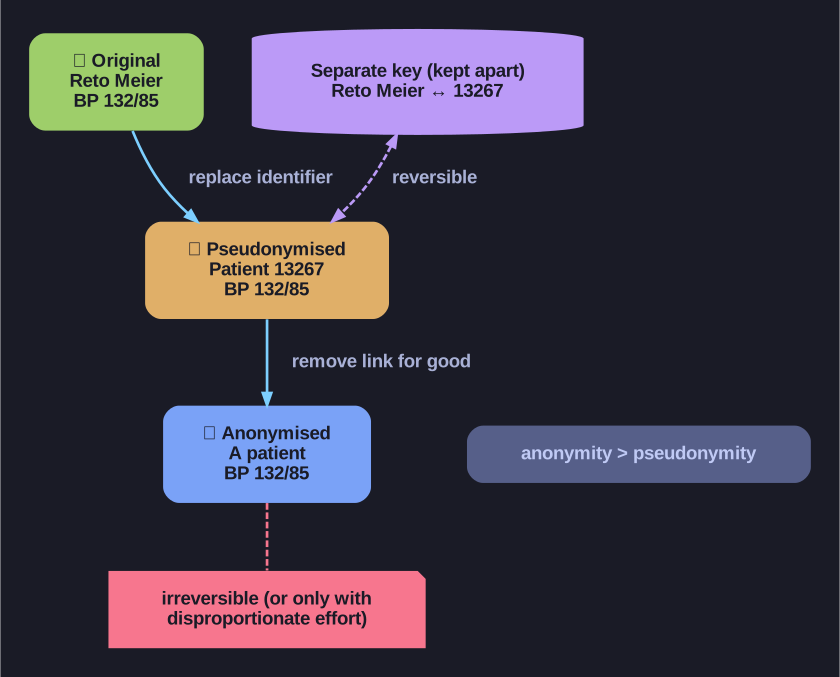
* The same record at three privacy levels — pseudonymisation swaps the identifier but keeps a separate reversible key, while anonymisation cuts the link for good. *
| Original | Pseudonymised | Anonymised | |
|---|---|---|---|
| Record | "Reto Meier has blood pressure 132/85" | "Patient 13267 has blood pressure 132/85" | "A patient has blood pressure 132/85" |
| Re-identification | — | possible with the separate key (Reto Meier ↔ 13267) | not possible (or only with disproportionate effort) |
- Pseudonymisation (GDPR/DSGVO): identifying fields are replaced, but a separately-kept mapping lets you reverse it. The extra info must be stored apart and protected. Reversible by design.
- Anonymisation (BDSG): altered so data can no longer be linked to a person, or only with disproportionate effort in time/cost/labour. Meant to be irreversible — though true, complete anonymisation is very hard.
Why "anonymity > pseudonymity": pseudonymous data is still personal data (the link exists somewhere), so it's still covered by data-protection law. Truly anonymised data isn't.
Tip: Beware re-identification — "anonymised" datasets have repeatedly been de-anonymised by combining them with other data.
Go deeper:
 Pseudonymization (Wikipedia) — contrasts reversible pseudonymisation with irreversible anonymisation under the GDPR.