What is the difference between hard handover, soft handover, and softer handover in UMTS?
Hard handover breaks the old link before making the new one; soft handover connects the mobile to several NodeBs simultaneously; softer handover connects it to several sectors of the same NodeB.
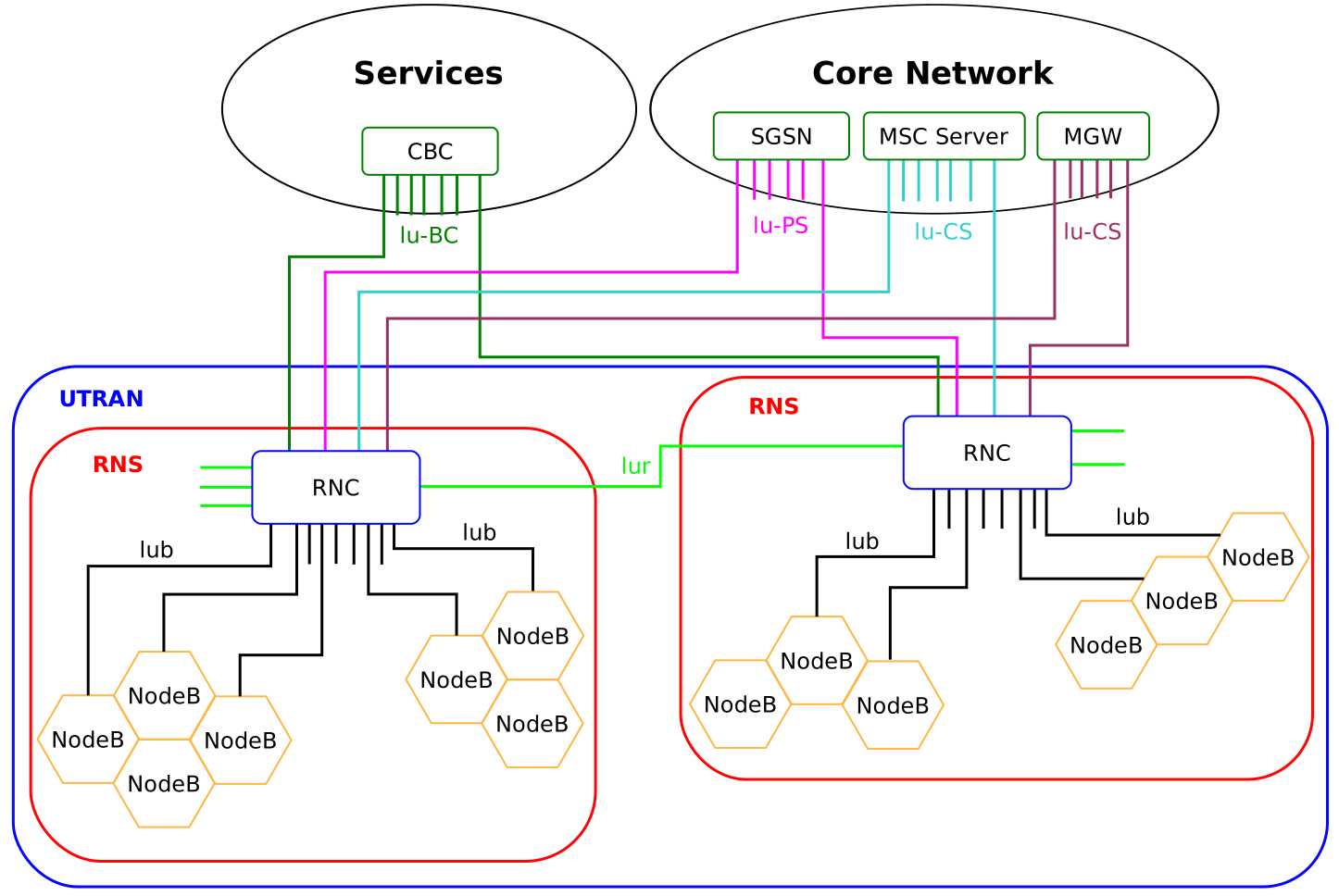
* UMTS Node B/RNC layout behind soft handover. — Tsaitgaist, CC BY-SA 3.0, via Wikimedia Commons. *
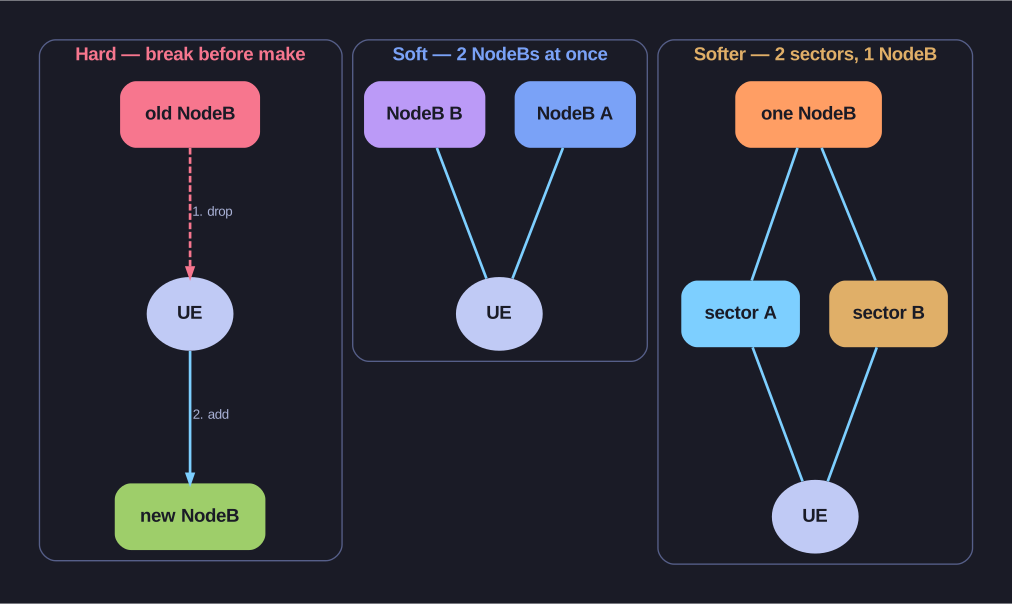
* Hard vs soft vs softer: how many cells — and which — the UE is linked to at once. *
The three types:
| Type | Definition |
|---|---|
| Hard handover | Break before make — the link between NodeB and UE is broken, then the network establishes the connection to the new NodeB |
| Soft handover | The mobile station is connected to several NodeBs at once |
| Softer handover | The mobile station is connected to several sectors of one NodeB |
Why CDMA makes soft handover possible: all UMTS cells share the same frequency, so the phone can listen to (and transmit toward) multiple cells simultaneously — no retuning required. GSM's TDMA radio must retune to a different frequency/slot, forcing hard handovers.
Soft vs. softer — remember the granularity: soft spans different towers, softer spans different sectors of one tower (the tri-sectorized antenna setup). The names are silly but the distinction matters technically — the two cases combine signals at different places in the network (RNC vs. NodeB).
Go deeper:
 UMTS handover — hard, soft, softer & inter-RAT (Electronics Notes) — a UMTS-specific walkthrough of all four handover types and how the active set + rake receiver combine cells, deeper than the generic encyclopedia entry.
- Soft handover (Wikipedia) — why CDMA/W-CDMA lets one phone hold links to several cells at once (rake receiver), the mechanism behind softer handover too.