What is the difference between Latency, Throughput, and Goodput?
Latency is the delay for data to travel point-to-point; throughput is the actual bits transferred per unit time; goodput is just the usable data, i.e. throughput minus overhead.
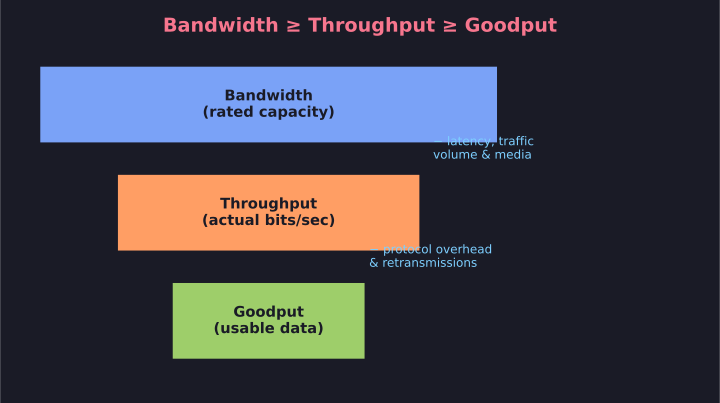
* Goodput is the narrowest slice: throughput minus protocol overhead and retransmissions; latency is the separate delay dimension. *
| Term | Definition |
|---|---|
| Latency | The amount of time, including delays, for data to travel from one point to another |
| Throughput | The measure of the transfer of bits across the media over a given period of time |
| Goodput | The measure of usable data transferred over a given period of time |
Key formula: Goodput = Throughput - Traffic Overhead
Traffic overhead includes protocol headers, retransmissions, and other non-payload data.
Go deeper:
-
 Throughput — Wikipedia — network throughput and a dedicated goodput section explaining the overhead deduction.
 -
Goodput — Wikipedia — application-level throughput: the useful bits delivered after excluding headers and retransmissions.
-
 Latency (engineering) — Wikipedia — network latency as one-way and round-trip delay in packet-switched networks.