What is the difference between the Access Stratum (AS) and the Non-Access Stratum (NAS) in 5G?
The Access Stratum covers everything about the radio access between UE and RAN (radio link, RRM, scheduling, handover, radio encryption); the Non-Access Stratum covers signalling between the UE and the core (registration, authentication, mobility & session management). AS runs UE↔gNB; NAS runs UE↔AMF.
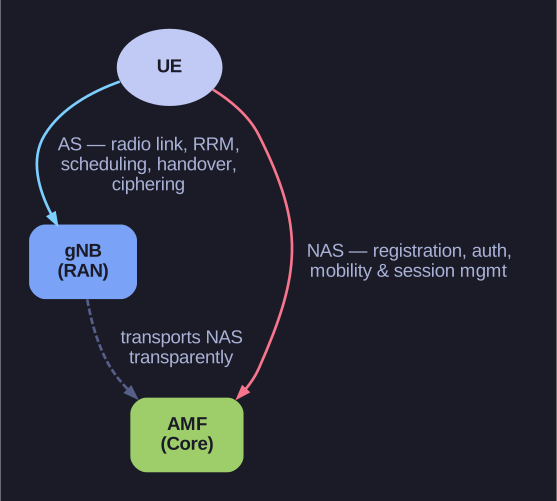
* AS = me to the tower; NAS = me to the core (AMF). *
Access Stratum (AS) — the radio/RAN layer:
- All protocols and functions that directly concern radio access
- Communication between UE ↔ RAN
- Functions: setting up/managing the radio link, Radio Resource Management (RRM), scheduling, handover, encryption at the radio level, QoS on the radio side, transmitting user data over the air
- Path: UE ↔ gNB (5G) / UE ↔ eNB (LTE)
Non-Access Stratum (NAS) — the UE↔core layer:
- Signalling, functions and protocols between UE ↔ Core Network
- Functions: registration/attach, authentication, mobility management, session management, bearer/PDU-session setup, security management, tracking-area updates
- Path: UE ↔ AMF (5G) / UE ↔ MME (LTE)
Why the distinction matters: the AS is about getting bits across the air to the tower; the NAS is about the UE's relationship with the core (who you are, what sessions you have). A NAS message is carried transparently over the AS radio protocols up to the gNB, then forwarded to the AMF — the radio doesn't "understand" NAS, it just transports it.
Tip: AS = "me ↔ the tower" (radio); NAS = "me ↔ the core brain" (AMF). In 5G the NAS endpoint is the AMF, exactly as it was the MME in LTE.
Go deeper:
 Access stratum (Wikipedia) — the radio-side layer (UE↔RAN) with its protocol-stack position below NAS.
- Non-access stratum (Wikipedia) — the UE↔core signalling layer with its mobility/session/identity functions (TS 24.501).