What is the difference between the naturalistic fallacy and the moralistic fallacy?
The naturalistic fallacy infers "ought" from "is"; the moralistic fallacy infers "is" from "ought" — both confuse facts with values.
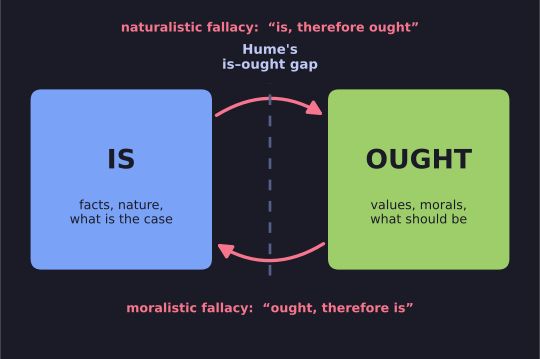
* Hume's is–ought gap: inferring "ought" from "is" is the naturalistic fallacy; inferring "is" from "ought" is the moralistic fallacy. *
| Naturalistic fallacy | Moralistic fallacy | |
|---|---|---|
| Direction | is → ought | ought → is |
| Form | "It's natural/the case, so it's good/right" | "It would be wrong, so it isn't the case" |
| Example | "Aggression is natural, so it's morally acceptable" | "Discrimination is wrong, so people can't really differ" |
Both ignore the is–ought gap (David Hume): you cannot derive a value (an ought) purely from facts (an is), and equally you cannot conclude a fact from a moral wish. The naturalistic fallacy launders nature into permission; the moralistic fallacy launders a moral preference into a claim about reality.
Tip: Same gap, opposite directions. Naturalistic = "is, therefore ought." Moralistic = "ought, therefore is." Both pretend you can cross from facts to values (or back) for free.
Go deeper:
 Is–ought problem — Wikipedia — Hume's point that a value can't be derived from facts alone.
- Naturalistic fallacy — Wikipedia — inferring "good" straight from "natural."