Quiz Entry - updated: 2026.07.30
What is the EUI-64 process for generating an IPv6 Interface ID?
Split the 48-bit MAC in half, insert fffe in the middle, and flip the 7th bit (U/L bit) of the first byte — giving a 64-bit Interface ID.
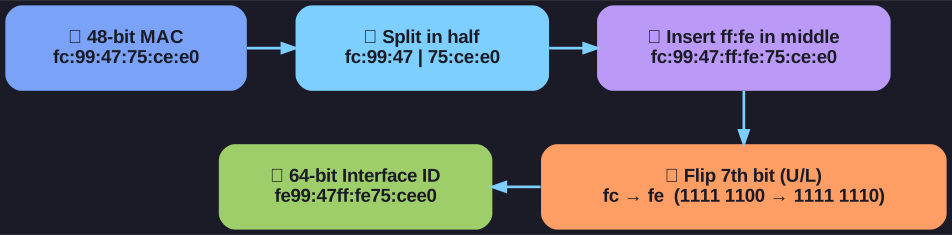
* The EUI-64 derivation worked end to end (fc:99:47:75:ce:e0 → fe99:47ff:fe75:cee0). *
EUI-64 (Extended Unique Identifier - 64 bit):
A method to create a 64-bit Interface ID from the 48-bit MAC address.
EUI-64 Process Steps:
Step 1: Split the MAC address in half
MAC: fc:99:47:75:ce:e0
     fc:99:47 | 75:ce:e0
Step 2: Insert fffe in the middle
fc:99:47:ff:fe:75:ce:e0
Step 3: Flip the 7th bit (Universal/Local bit)
fc = 1111 1100
     ───────↑ 7th bit
fe = 1111 1110 (bit flipped from 0 to 1)
Result:
MAC:            fc:99:47:75:ce:e0
EUI-64 IID:     fe99:47ff:fe75:cee0
Complete IPv6 address with prefix 2001:db8:acad:1::/64:
2001:db8:acad:1:fe99:47ff:fe75:cee0
Security note: EUI-64 exposes the MAC address, making device tracking possible. Many OS now use random Interface IDs instead.
Go deeper:
 RFC 4291 §2.5.1 + Appendix A — Modified EUI-64 interface identifiers — the authoritative rule, including why the U/L bit is inverted.
- MAC address — universal/local bit & EUI-64 (Wikipedia) — the OUI split and the U/L bit that EUI-64 flips.