Quiz Entry - updated: 2026.07.30
What is the fundamental operation cycle of a computer (the "life as a computer")?
The fetch–decode–execute cycle: read the instruction the PC points to, do it, advance the PC, and repeat — billions of times a second.
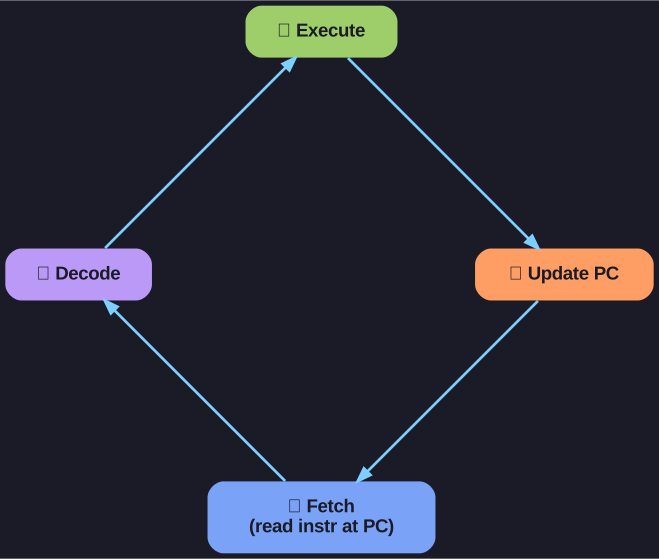
* The CPU endlessly repeats fetch, decode, execute, and update-PC to run a program. *
1. Read next instruction from memory (address in PC)
2. Decode the instruction (what operation? what operands?)
3. Execute the instruction (do the operation)
4. Update PC to point to next instruction
5. Goto step 1
This simple loop runs billions of times per second on modern CPUs. The entire complexity of computing emerges from this basic cycle!
What happens in each phase:
- Fetch: CPU sends address from PC to memory, receives instruction bytes
- Decode: Control unit figures out "is this an add? a jump? a load from memory?"
- Execute: ALU performs operation, or memory is accessed, or PC is changed (for jumps)
- PC update: Usually PC += instruction_length, but jumps/branches change this
The deep questions this raises:
- Where are the instructions stored? (Memory - same place as data!)
- What do instructions look like? (Binary patterns defined by ISA)
- How do we know where the next instruction is? (PC register tracks this)
- Where is the data? (Registers for fast access, memory for everything else)
- What happens at power on? (Hardware sets PC to a fixed "reset vector" address)
Go deeper:
 Instruction cycle (Wikipedia) — walks fetch→decode→execute step by step, naming the PC, MAR, MDR and CIR registers and how pipelines overlap the stages.