What is the just-world hypothesis (just-world bias)?
The need to believe the world is fundamentally fair leads us to assume people get what they deserve — which slides into blaming victims for their misfortune.
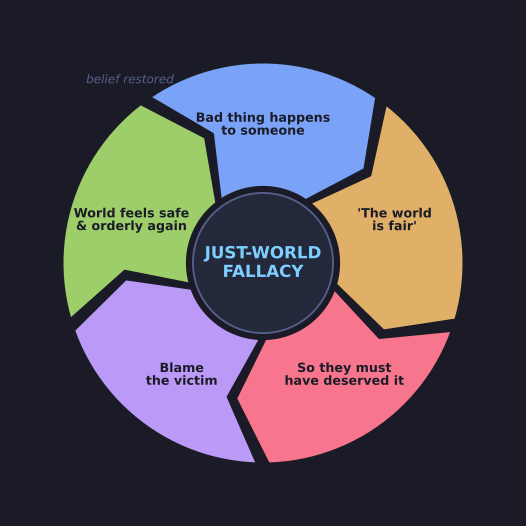
* To keep the world feeling fair, we conclude the sufferer must somehow have deserved it — which slides into victim-blaming. *
The mechanism is comfort and control: a world where bad things happen randomly to good people is frightening, so we protect ourselves by assuming there must be a reason — the sufferer must have been careless, foolish or somehow at fault. That reasoning restores the feeling that we are safe because we would never make that mistake.
Example: Hearing that someone was robbed, people often immediately ask what the victim was doing in that area, or what they were wearing — searching for a way the victim "brought it on themselves," which makes the world feel orderly again at the victim's expense.
Tip: Catch yourself looking for what a victim "did wrong." Often the honest answer is "nothing — bad things happen to careful people too," and that discomfort is the bias you're soothing.
Go deeper:
 Wikipedia — Just-world fallacy — Lerner's experiments and its social consequences.