What is the Location Update in GSM, and which types exist?
The Location Update is the general procedure by which a phone tells the network where it is — used both for initial registration (type IMSI_ATTACH) and when changing location areas (type NORMAL) or on a timer (type PERIODIC).
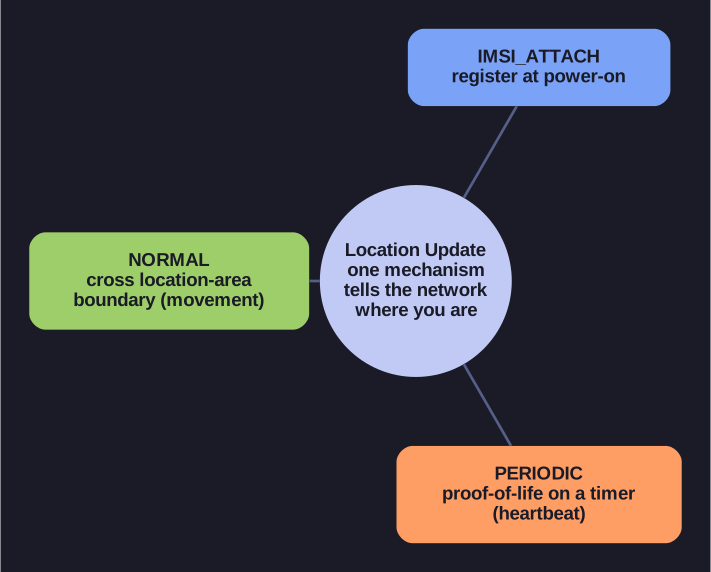
* One mechanism, three jobs: IMSI-attach, normal, periodic. *
One mechanism, several jobs:
| Use | Location Update type |
|---|---|
| Registering with the network (power-on) | IMSI_ATTACH |
| Cell/location-area change (the literal "location" update) | NORMAL |
| Periodic re-registration (proof of life on a timer) | PERIODIC |
Why the network needs it: Without knowing your approximate location (the Location Area), the network couldn't deliver incoming calls — paging would have to flood the entire country. The Location Update keeps the network's location registers (VLR/HLR) current, so paging only needs to search one location area.
Why PERIODIC exists: If a phone dies, falls in a lake, or drives into a tunnel forever, the network would otherwise keep stale state indefinitely. The periodic update is a heartbeat: no update for too long → the network can mark the subscriber detached and stop wasting paging resources.
Distinction worth remembering: "Location Update for position tracking" (NORMAL — triggered by movement across a location-area boundary) vs. "Periodic Location Update" (triggered purely by a timer, no movement needed).
Go deeper:
 GSM procedures — IMSI attach, location update & detach (Wikipedia) — spells out how the same Location Update mechanism serves attach, location-area change and the periodic heartbeat, and how the network maintains VLR/HLR registration through it.