What is the Mobile Station (MS) in GSM, and what does it consist of?
The Mobile Station is the subscriber's device — the phone itself (hardware + software) plus the SIM — and it stores all the relevant information that identifies a GSM subscriber.
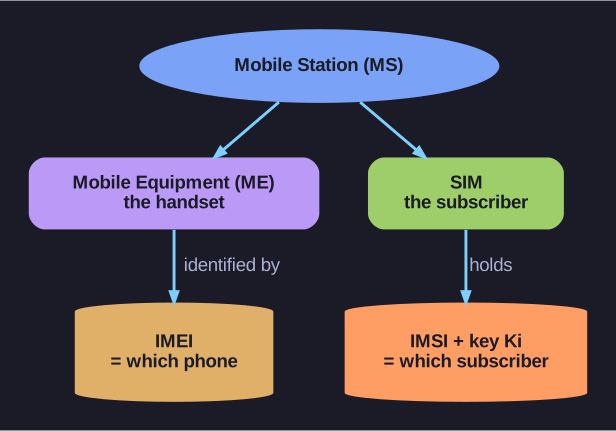
* MS = ME + SIM: the handset (IMEI) plus the SIM (IMSI, Ki). *
Two logical parts:
- Mobile Equipment (ME) — the physical handset: radio, processor, display, the software stack. Identified by its IMEI (International Mobile Equipment Identity), the hardware serial number.
- SIM (Subscriber Identity Module) — the smart card that actually is the subscriber. It holds the IMSI (International Mobile Subscriber Identity) and the secret key Ki used for authentication.
Why the split matters: GSM deliberately separates the device from the subscription. Your identity, phone number, and security keys live on the SIM, so you can move your SIM into any GSM phone and it becomes "your" phone. The network authenticates the SIM, not the handset.
Position: The MS sits at the very bottom of the architecture, talking to the BTS (tower) over the radio air interface (Um). Everything above it — BTS, BSC, MSC, the registers — exists to give this one device a connection.
Tip: Remember the layering: ME is the box, SIM is the who. The IMEI says "which phone," the IMSI says "which subscriber."
Go deeper:
 SIM card (Wikipedia) — the SIM as "the subscriber": how it stores the IMSI and the secret key Ki used for authentication.
- International Mobile Equipment Identity (Wikipedia) — the IMEI that identifies the handset hardware, the "which phone" half of the ME/SIM split.