What is the optimism bias?
We overestimate the likelihood of good things happening to us and underestimate the likelihood of bad ones — "it won't happen to me."
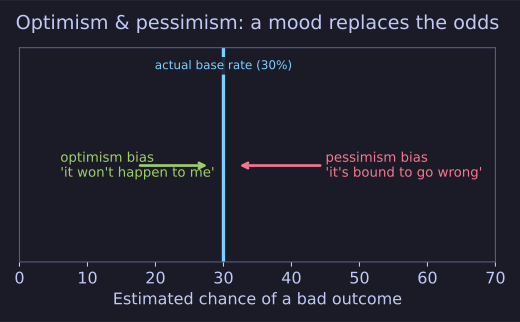
* Both biases push the estimate off the true base rate — optimism below it ('it won't happen to me'), pessimism above it. *
The mechanism is partly motivational (optimism feels good and keeps us functioning) and partly a failure to apply general statistics to ourselves: we accept that some people get cancer, divorce or crash their car, while quietly assuming we're the exception.
Example: Most smokers know smoking causes disease in general, yet rate their own personal risk as below average. New business owners routinely expect to beat the high failure rate that they know applies to startups overall.
Tip: Useful for motivation, dangerous for planning. For decisions with real downside, deliberately ask "what's the base rate for people in my exact situation?"
Go deeper:
 Wikipedia — Optimism bias — the neuroscience of unrealistic optimism and its upsides/risks.