What is the Protection Motivation Theory (PMT), and which two appraisal processes does it describe?
PMT (Rogers, 1975) says our protective behavior results from two unconscious evaluations: a threat appraisal ("how dangerous is this really?") and a coping appraisal ("can I do something about it — and can I pull it off?").
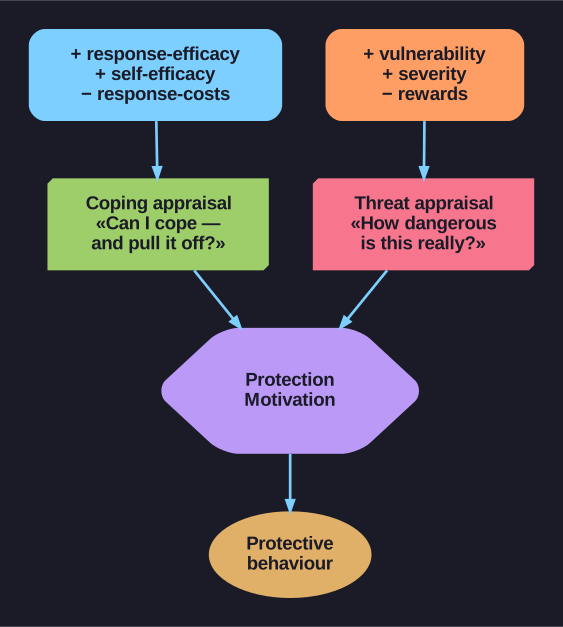
* PMT: a threat appraisal and a coping appraisal each combine their factors, feed Protection Motivation, and result in protective behaviour. *
The model:
- Bedrohungseinschätzung (threat appraisal) — evaluating the danger itself
- Bewältigungseinschätzung (coping appraisal) — evaluating my options against it
- Schutzmotivation (protection motivation) — the result of both processes: my intention to act (or not act) protectively
Originally developed to explain how fear appeals change attitudes (health campaigns: smoking, seatbelts), PMT became the standard model for security behavior: why do people ignore warnings, skip updates, or click phishing links? Because either the threat doesn't feel real to them, or they don't believe they can cope with it.
Tip: Remember the two questions verbatim — "Wie gefährlich ist das wirklich?" and "Was kann ich dagegen tun und schaffe ich das?" Every awareness measure should move the answer to at least one of them.
Go deeper:
 Protection motivation theory — Wikipedia — Rogers Modell (1975/1983) mit Threat- und Coping-Appraisal, auch in der Informationssicherheit.