What is the purpose of the IP header, and why is it read by every Layer 3 device along the path?
The IP header carries the source and destination addresses (plus processing fields) that steer the packet; every router reads it to decide where to forward the packet next.
The IP header is the "shipping label" wrapped around the transport-layer segment to form the packet — it carries everything the network needs to deliver the data without ever opening the payload. Its core purpose is to ensure the packet travels in the correct direction toward the destination, and it also holds the fields routers use to process the packet, such as TTL (Time to Live, the hop counter), Protocol/Next Header (which upper-layer protocol the payload is), and the QoS/priority field. Every Layer 3 device along the path reads it because routing is hop-by-hop: each router makes its own forwarding decision by examining the destination address. Since that address does not change from source to destination (absent NAT), the same header steers all of them, even though the surrounding Layer 2 frame is rebuilt at each hop. The one field that does change per hop is TTL — each router decrements it and discards the packet at zero, which prevents misrouted packets from looping forever.
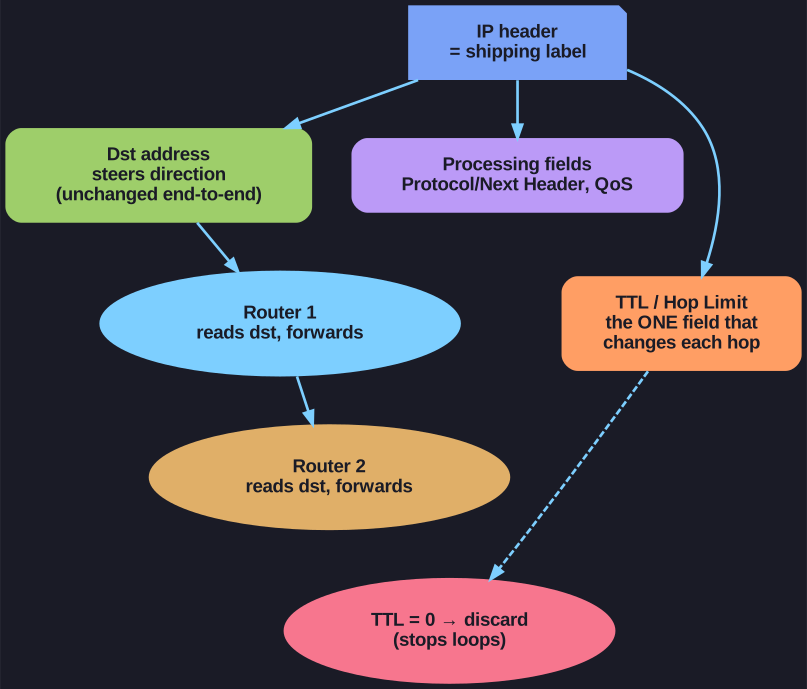
* The header steers the packet at every hop via the unchanging destination address; TTL is the one field that decrements each hop and drops the packet at zero. *
Purpose of the IPv4/IPv6 header:
- Ensures the packet is sent in the correct direction toward the destination.
- Holds the fields the network layer needs to process the packet (TTL/Hop Limit, Protocol/Next Header, QoS, etc.).
- Wraps the transport-layer segment to form the Network Layer PDU = the packet.
Why every router reads it:
- Each router along the path makes an independent forwarding decision by examining the destination address in the header.
- The IP addressing does not change from source to destination (absent NAT), so the same header guides every hop.
- The Layer 2 frame is rebuilt at each hop, but the Layer 3 packet/header stays intact end to end.
Gotcha: TTL (Hop Limit) is the one header field that does change each hop — it is decremented, and the packet is discarded at zero, which is what prevents routing loops from circulating forever.
Go deeper:
 Wikipedia — Time to live — the hop-count field and how it prevents undeliverable packets circulating forever.
- Wikipedia — IP routing — why each hop independently reads the header to forward.