What is the relationship between Fedora, CentOS Stream, and RHEL?
They're three points on one timeline of the same code: Fedora is the bleeding edge, a Fedora release is frozen and stabilised into CentOS Stream, and CentOS Stream is hardened into a numbered RHEL release that then only gets point updates.
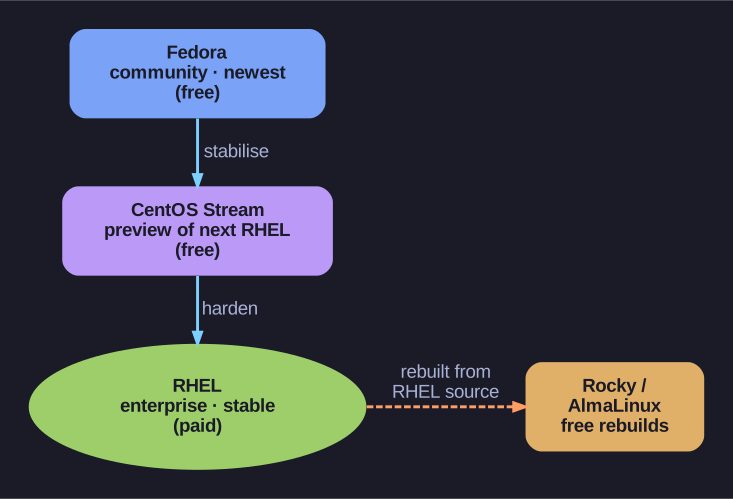
* One codebase, three stages of freshness-vs-stability — plus the free RHEL rebuilds (Rocky/Alma). *
The trade-off across the three is freshness vs. stability — you can't have both at once, so the pipeline lets you pick. Move toward Fedora for the newest software at the cost of more churn; move toward RHEL for rock-solid predictability at the cost of older versions.
Fedora 34 ──→ CentOS Stream 9 ──→ RHEL 9.0 → 9.1 → 9.2
   ↓
Fedora 35
   ↓
Fedora 36 ...
| Distribution | Role | Stability | Update style |
|---|---|---|---|
| Fedora | Cutting-edge features | Lower | New release ~every 6 months |
| CentOS Stream | Preview of next RHEL | Medium | Rolling |
| RHEL | Production | Highest | Periodic point releases |
So in practice: a developer who wants the latest toolchains picks Fedora; someone validating that their app will run on the next RHEL picks CentOS Stream; a bank running 24/7 services picks RHEL.
Tip: Want RHEL's exact stability without the subscription fee? Rocky Linux and AlmaLinux are free, bug-for-bug rebuilds of RHEL source — popular replacements after the original free CentOS was discontinued.