Quiz Entry - updated: 2026.07.30
What is the structure of an IPv6 Global Unicast Address (GUA)?
Three parts: Global Routing Prefix (typically /48, assigned by the ISP) + Subnet ID (typically 16 bits, for the org's subnets) + Interface ID (64 bits, identifies the host).
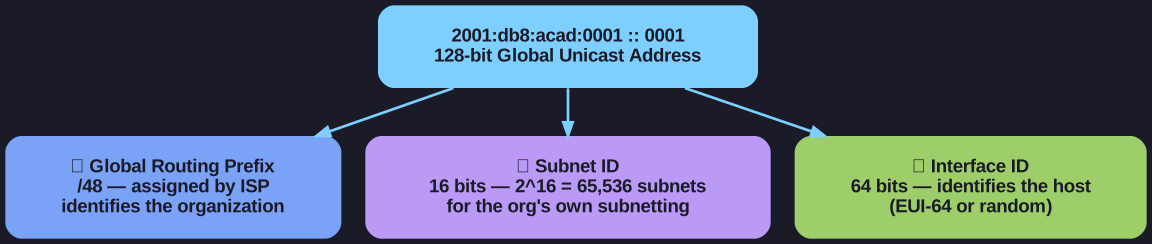
* The three fields of a Global Unicast Address and their bit widths. *
IPv6 GUA Structure:
|←───────────── 64 bits ──────────────→|←── 64 bits ──→|
┌──────────────────┬──────────┬────────────────────────┐
│ Global Routing   │ Subnet   │     Interface ID       │
│    Prefix        │   ID     │                        │
└──────────────────┴──────────┴────────────────────────┘
     48 bits          16 bits        64 bits
Three parts of a GUA:
| Part | Size | Purpose |
|---|---|---|
| Global Routing Prefix | Usually 48 bits | Assigned by ISP; identifies organization's network |
| Subnet ID | Usually 16 bits | Used for subnetting within organization |
| Interface ID | 64 bits | Identifies specific interface/host |
Example: 2001:db8:acad:1::1/64
- Global Routing Prefix: 2001:db8:acad (48 bits)
- Subnet ID: 0001 (16 bits)
- Interface ID: 0000:0000:0000:0001 (64 bits)
Key insight: With a /48 prefix, an organization can create 2^16 = 65,536 subnets, each with 2^64 hosts!
Go deeper:
 IPv6 address — global unicast (Wikipedia) — the routing-prefix / subnet-ID / interface-ID split and the /48-to-/64 allocation hierarchy.