What is the Texas sharpshooter fallacy?
Cherry-picking a cluster in the data and drawing a target around it afterward — treating coincidental patterns as if they were meaningful.
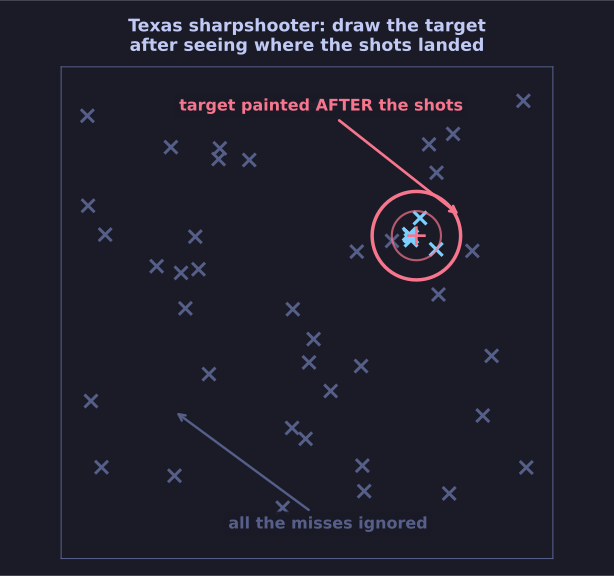
* Fire first, then paint the bullseye around the tightest chance cluster and ignore every miss. *
Named for a shooter who fires randomly at a barn, then paints a bullseye around the tightest cluster of holes to look like a crack shot. The fallacy is ignoring the misses and the randomness, focusing only on a chance grouping, and then claiming it proves a pattern.
"This town has a higher cancer rate than its neighbours, so the local factory must be causing it."
If you scan enough towns, some will show clusters by pure chance — singling out the high one and inferring a cause ignores all the towns where nothing unusual happened. The "pattern" was selected after the fact to fit a conclusion. (LaBossiere's related spotlight fallacy is its media cousin: assuming the cases that get the most coverage represent the whole group.)
Tip: The giveaway is that the hypothesis is drawn after spotting the cluster, with the non-matching data quietly discarded.
Go deeper:
 yourlogicalfallacyis.com — The Texas sharpshooter — cherry-picking a cluster, in one page.
 Wikipedia — Texas sharpshooter fallacy — clustering illusions and drawing the target after the fact.