Quiz Entry - updated: 2026.07.30
What is the UTRAN, and what are its two components (Node B and RNC)?
The UTRAN is the radio access network consisting of Node Bs (base stations) controlled by RNCs (Radio Network Controllers) — it handles everything related to the wireless connection.
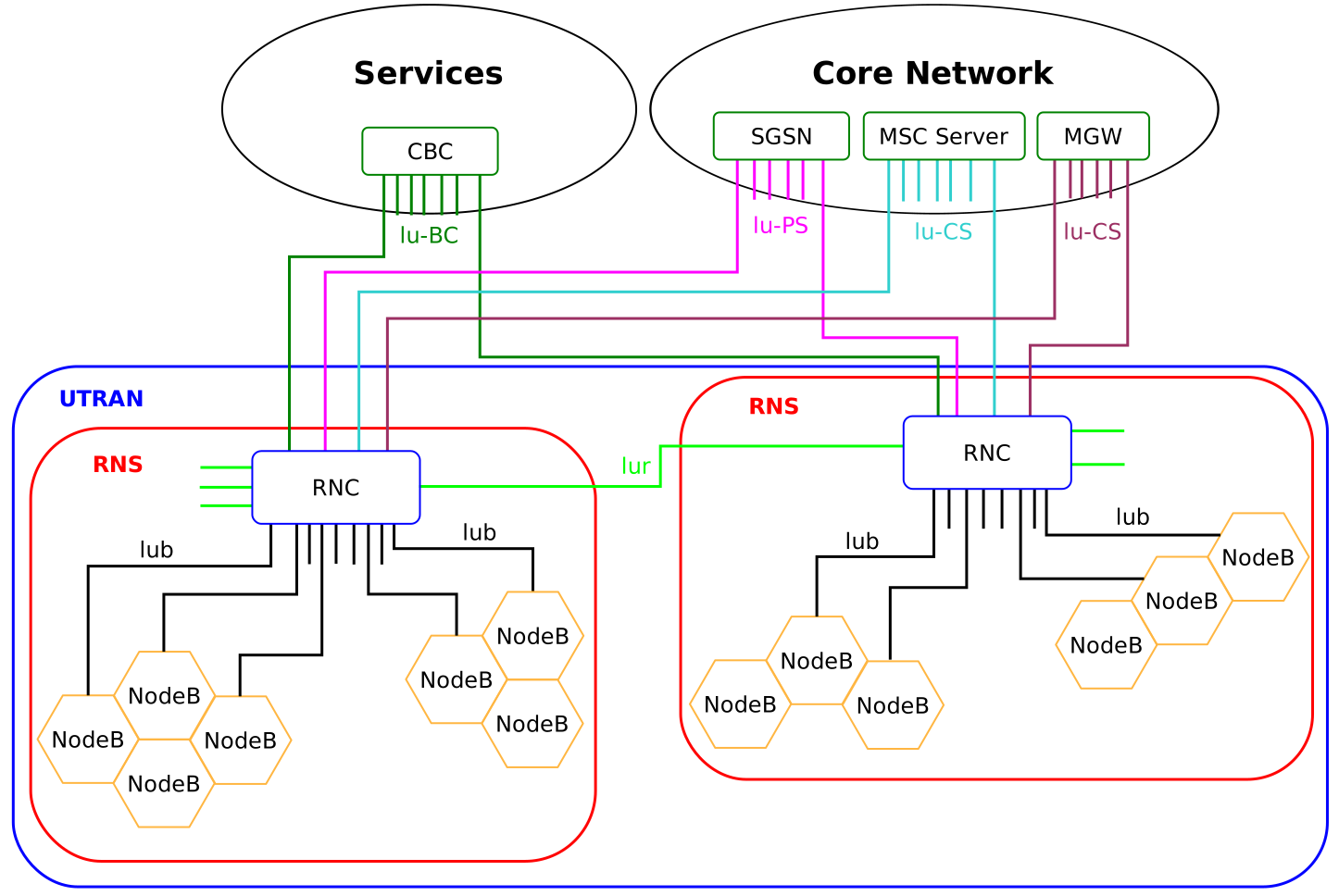
* UMTS UTRAN: Node B and RNC to the core. — Tsaitgaist, CC BY-SA 3.0, via Wikimedia Commons. *
Node B (Base Station):
- The UMTS equivalent of GSM's BTS
- The physical radio tower that communicates with UEs over the Uu interface (air interface)
- Handles radio transmission/reception, power control measurements, and some signal processing
- The name "Node B" has no special meaning — it was just a placeholder name during standardization that stuck
RNC (Radio Network Controller):
- The UMTS equivalent of GSM's BSC
- Controls multiple Node Bs via the Iub interface
- Manages and controls radio resources for connected Node Bs
- Handles key functions:
- Handover decisions between Node Bs
- Power control (outer loop)
- Admission control — decides if a new connection can be accepted
- Encryption of user data
UTRAN structure:
UE ←(Uu)→ Node B ←(Iub)→ RNC ←(Iu)→ Core Network
                              ↕ (Iur)
                             RNC
Multiple RNCs can communicate with each other via the Iur interface — this enables soft handover between Node Bs controlled by different RNCs.
Go deeper:
 UMTS UTRA / UTRAN: Radio Network Subsystem (Electronics Notes) — breaks the RNS into Node B and RNC, lists what each one actually does (RNC as the encryption point and handover/resource manager), and why the standardised Iub/Iur/Iu let operators mix vendors.
- UMTS Terrestrial Radio Access Network (Wikipedia) — kept for the canonical UTRAN overview and its diagram.