What protocols operate at each layer of the TCP/IP model?
Application (DNS, HTTP, SMTP, FTP...), Transport (TCP, UDP), Internet (IPv4/IPv6, ICMP, routing protocols), and Network Access (ARP, Ethernet, WLAN).
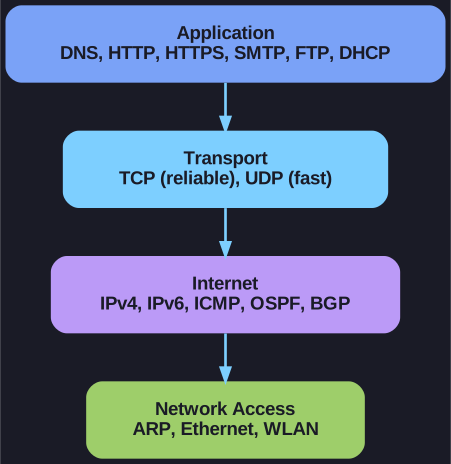
* Representative protocols at each of the four TCP/IP layers. *
| TCP/IP Layer | Key Protocols |
|---|---|
| Application | DNS, DHCPv4/v6, SLAAC, SMTP, POP3, IMAP, FTP, SFTP, TFTP, HTTP, HTTPS, REST |
| Transport | TCP (connection-oriented), UDP (connectionless) |
| Internet | IPv4, IPv6, NAT, ICMPv4, ICMPv6, OSPF, EIGRP, BGP |
| Network Access | ARP, Ethernet, WLAN |
Note: TCP provides guaranteed delivery (connection-oriented), while UDP provides faster but unreliable delivery (connectionless).
Caveat on BGP: the Cisco curriculum groups all routing protocols (OSPF, EIGRP, BGP) at the Internet layer because that's where the routes they build are used. That's fine for OSPF and EIGRP, which ride directly on IP. BGP is the odd one out — it actually runs as an application over TCP (port 179), so by strict layering BGP belongs at the Transport/Application layer even though it carries Internet-layer routing information. Expect the layer chart to show it at Internet; remember it's really a TCP-based application.
Go deeper:
 Internet protocol suite — the layers and the protocols that map to each.
- Border Gateway Protocol — confirms BGP is unique in running over TCP (port 179), the caveat above.
- Internet Control Message Protocol — the Internet-layer ICMP/ICMPv6 helper protocol.