What was the first real mobile phone network, and what generation is it?
The first automatic analog mobile phone system was launched in 1979 by NTT in Tokyo, Japan. We call it 1G.
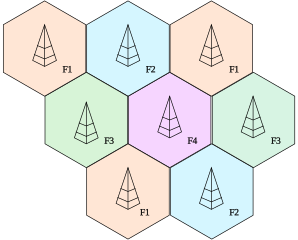
* Frequency reuse made 1G viable. — Andrew pmk, CC BY-SA 2.5, via Wikimedia Commons. *
1G stands for "first generation" and refers to the A/B/C analog networks. These were purely analog systems where the voice signal was transmitted as a continuous radio wave, not converted to digital data.
Key characteristics of 1G:
- Analog voice only, no data services at all.
- You had to know the area code (Vorwahl) to make a call.
- No encryption. Anyone with a radio scanner could listen in.
- No SMS, no internet, nothing but voice calls.
- Limited capacity, few simultaneous users per cell.
Why Japan first? NTT (Nippon Telegraph and Telephone) had been researching cellular technology since the 1960s. Their dense urban environment in Tokyo made the cellular concept, using many small cells instead of one big transmitter, particularly attractive.
Go deeper:
 Basic Cellular System Concept (Electronics Notes) — why 1G needed cells: frequency reuse turns a 4,000-user band into millions of subscribers, the breakthrough that made 1G viable.
- History of Mobile Communications: 1G–5G (Electronics Notes) — places NTT's 1979 launch in the wider 1G timeline alongside NMT and AMPS.