What's the difference between a valid and a sound deductive argument?
Valid = the conclusion follows from the premises (structure only); sound = valid and all premises are actually true (so the conclusion must be true too).
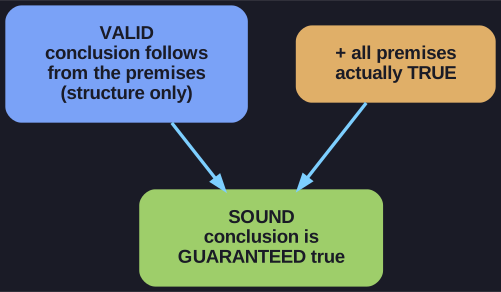
* Sound = valid (structure holds) AND all premises true — only then is the conclusion guaranteed. *
This is the single most important distinction in deductive logic:
| Valid (gültig) | Sound (schlüssig) | |
|---|---|---|
| Requirement | Conclusion follows logically from premises | Valid and all premises are true |
| Truth of premises | Irrelevant — can be false | Must all be true |
| Conclusion | Can be false! | Guaranteed true |
A valid argument can have false premises and a false conclusion, or even false premises and a true conclusion — e.g. "(P1) All fruits are vegetables. (P2) Spinach is a fruit. (K) Therefore spinach is a vegetable." That's valid (the conclusion follows from the premises) but not sound (the premises are false). Validity alone does not make the conclusion true.
Tip: Valid = "the logic is wired correctly." Sound = "the logic is wired correctly and the inputs are true." Only soundness guarantees a true conclusion.
Go deeper:
 Validity (logic) (Wikipedia) — the structural half of the pair.
- Soundness (Wikipedia) — valid plus all-true premises — the Socrates vs penguin examples.