What's the difference between "wireless" and "mobility"?
Wireless means communication without cables. Mobility means the device can move while maintaining its connection. These are two separate properties.
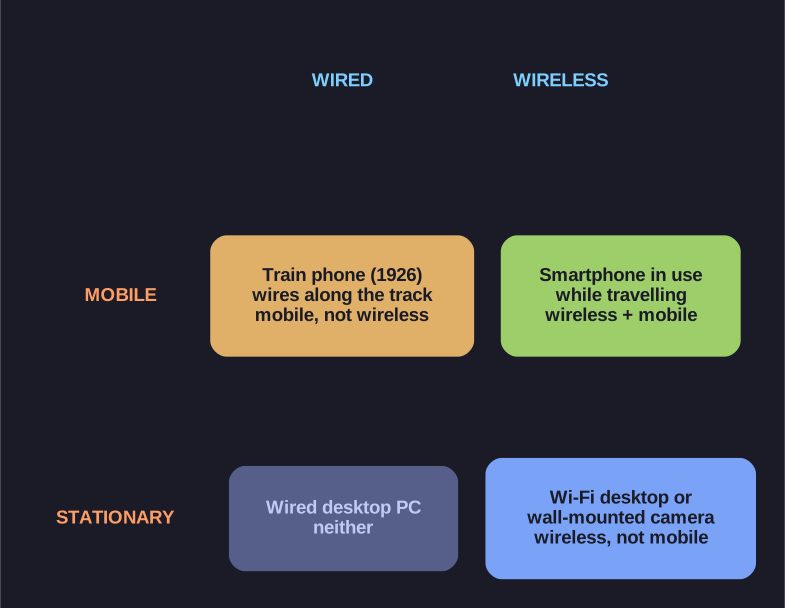
* The two properties are independent — a device can have either, both, or neither. *
Wireless without mobility:
- A desktop computer connected via Wi-Fi to a router. It communicates wirelessly but sits on a desk and never moves.
- A wireless security camera. No cables, but it's bolted to a wall.
Mobility without wireless (historically):
- The 1926 Hamburg-Berlin train telephone: passengers could call from a moving train, so the phone was mobile, but the actual signal travelled over wires running alongside the tracks rather than over the air.
Why this matters: When designing a wireless network, the challenges of wireless (shared medium, interference, spectrum limits) and the challenges of mobility (handover, location tracking, energy) are fundamentally different engineering problems. A system can face one, the other, or both.
Modern cellular networks tackle both simultaneously, which is why they're so complex. A home Wi-Fi network only really needs to solve the wireless challenges, not mobility.
Go deeper:
 Mobile computing (Wikipedia) — the mobility side as its own discipline: keeping a session alive as the device and its point of attachment change.