Quiz Entry - updated: 2026.07.30
When a switch has multiple equal-cost paths to the root bridge, what three tiebreakers does STP (Spanning Tree Protocol) use (in order)?
Lowest sender BID (Bridge ID), then lowest sender port priority, then lowest sender port ID.
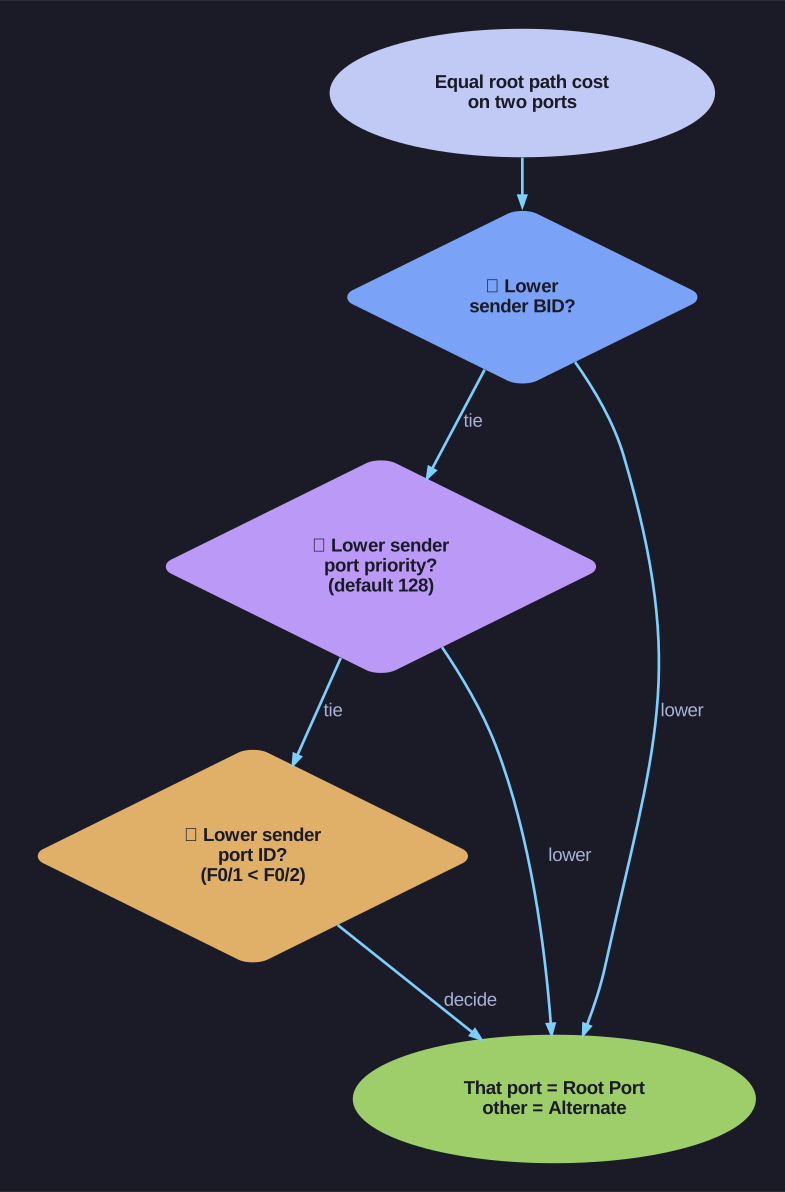
* The three STP tiebreakers, in order. *
When the internal root path cost is identical for multiple ports, STP uses these tiebreakers in order:
| Priority | Tiebreaker | Details |
|---|---|---|
| 1st | Lowest sender BID | Compare the BID of the upstream switch sending the BPDU (Bridge Protocol Data Unit) |
| 2nd | Lowest sender port priority | Default is 128; configurable per-port on the upstream switch |
| 3rd | Lowest sender port ID | The physical port number (e.g., F0/1 < F0/2) |
Example (lowest sender BID): S2 has two equal-cost paths — one through S3 (BID 32769.AAAA.AAAA.AAAA) and one through S4 (BID 32769.1111.1111.1111). S4 has the lower BID, so the port connected to S4 (F0/1) becomes S2's root port.
Key detail: The decision is based on the sender's (upstream switch's) port ID, not the receiver's port ID.
Go deeper:
 Spanning-Tree Port Roles (NetworkAcademy.IO) — the tiebreak order: lowest sender BID → port priority → port ID.