When should a network problem be escalated rather than resolved by the technician?
Escalate when the problem needs a manager's decision, specific expertise, or a level of network access the troubleshooting technician does not have; company policy should define when and how.
Escalation is the deliberate hand-off of a problem to someone with the authority, knowledge, or access to resolve it, and it is part of the troubleshooting methodology rather than an admission of defeat. The three classic triggers are a decision only management can make (for example, approving a costly fix or accepting downtime), expertise the technician lacks (a specialised protocol or vendor system), and an access level the technician is not granted (such as core routers or a server the technician has no rights on). A written company policy defining when and how to escalate matters because it removes guesswork in the moment and keeps the technician inside their authorised boundaries. Recognising a trigger early avoids hours of wasted effort on a problem that was never the technician's to solve.
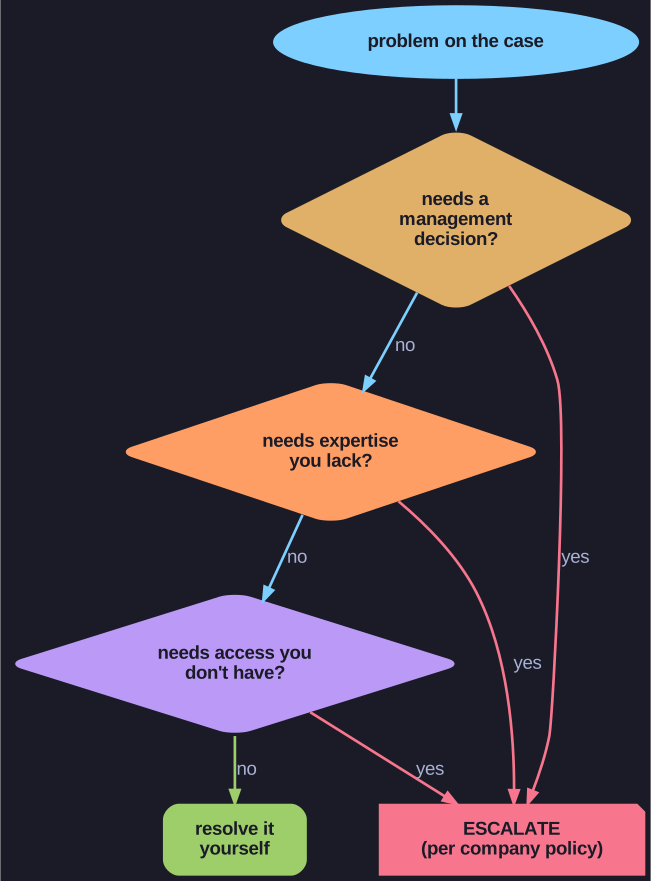
* Escalate on any of three triggers — management decision, missing expertise, missing access — otherwise resolve it yourself. *
Resolve or Escalate?
- Not every problem can be fixed immediately by the technician on the case.
- A problem should be escalated when it requires:
- a management decision,
- some specific expertise the technician lacks, or
- a network access level the technician does not have.
- A clear company policy should state when and how a technician escalates a problem.
Key insight: Escalating early when one of these conditions is met avoids wasted time and respects access/authority boundaries — it is part of the methodology, not a failure.
Go deeper:
 Wikipedia — Technical support § Support levels — the tiered model (L1–L4) that formalises escalating an issue to the right expertise or authority.