Which three algorithms protect the LTE air interface, and who developed them?
SNOW 3G (stream cipher, University of Lund, Sweden), AES (block cipher, NIST/USA), and ZUC (stream cipher, Chinese Academy of Sciences). Each can be used for confidentiality, integrity, or both — and user-plane confidentiality (at the PDCP layer) is optional.
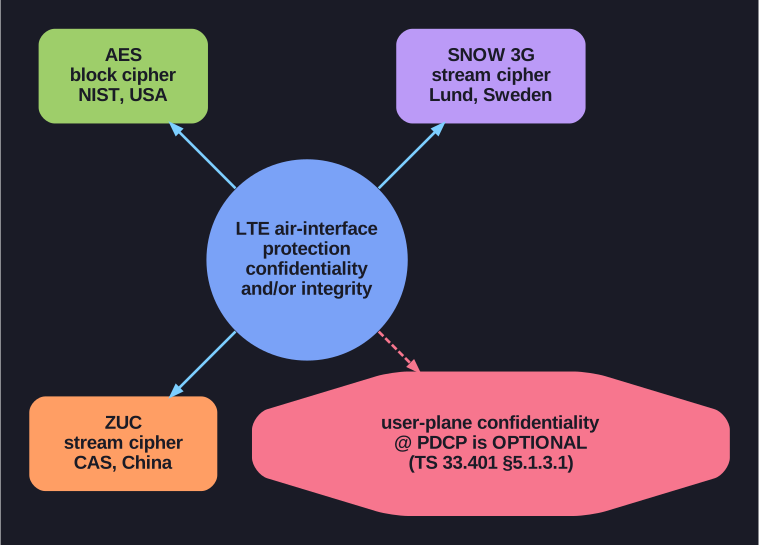
* LTE's three air-interface algorithms by origin. *
The three air-interface algorithms:
| Algorithm | Type | Origin |
|---|---|---|
| SNOW 3G | Stream cipher | University of Lund, Sweden |
| AES | Block cipher | NIST, USA |
| ZUC | Stream cipher | Chinese Academy of Sciences, China |
Each can protect confidentiality, integrity, or both — LTE separates these two security goals and lets the network choose the algorithm per goal.
The important caveat (3GPP TS 33.401 – 5.1.3.1): user-plane confidentiality protection is done at the PDCP layer and is OPTIONAL. This is a recurring theme in LTE security: strong mechanisms exist, but several are not mandatory or not on by default — which is exactly what the NIST attack-vector analysis criticizes.
Why three algorithms from three countries? Algorithmic diversity (and geopolitical neutrality) — if one cipher is broken, networks can switch to another without redesigning the protocol. It also reflects that 3GPP is a global consortium, not a single nation's standard.
Go deeper:
 SNOW (Wikipedia) — SNOW 3G, the stream cipher behind the 3GPP UEA2/UIA2 confidentiality and integrity functions.