Quiz Entry - updated: 2026.07.30
Who is responsible for fragmentation in IPv6, and why is it different from IPv4?
In IPv6 only the source host fragments — routers never fragment in transit; a router that gets an oversized packet simply drops it and signals back.
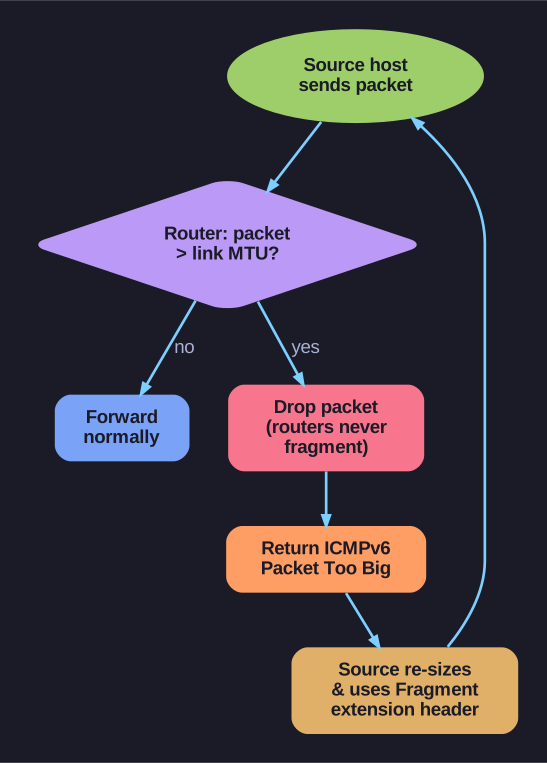
* Routers never fragment in IPv6 — they drop and signal back; only the source fragments. *
In IPv4, any router could fragment a too-big packet on the fly. IPv6 forbids that to keep forwarding fast and simple:
- Routers do not fragment. If a packet exceeds a link's MTU, the router drops it and returns an ICMPv6 "Packet Too Big" message
- The source/client is responsible for sizing packets to fit
- Fragmentation, when needed, is done by the source and recorded in a separate Fragment extension header; each fragment carries the base header plus that fragment header
- The whole original datagram (including its header) can be split across fragments and reassembled at the destination
Tip: Pushing fragmentation to the endpoints is a recurring IPv6 theme — keep the core routers dumb and fast, put the work at the edges.
Go deeper:
 RFC 8200 — IPv6 Specification — confirms source-only fragmentation and the router "Packet Too Big" behaviour.
- IPv6 packet — Fragmentation (Wikipedia) — the Fragment extension header and sender-side reassembly model.