Why do people perceive the same media outlet so differently, and what role do algorithms play?
Perception is shaped less by the content itself than by how social-media algorithms select and order what each person sees — so two people effectively consume different "versions" of the same outlet.
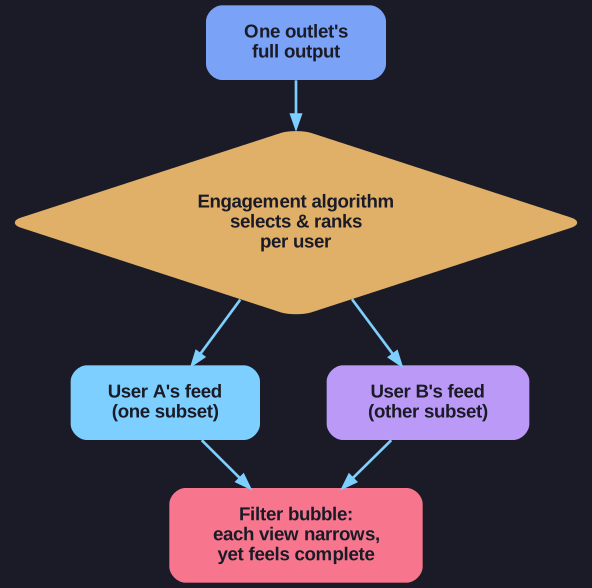
* The same outlet reaches two users as different feeds, because the algorithm curates per person — narrowing each view into a filter bubble. *
A media organisation's reporting is not received in a vacuum. On social platforms, recommendation algorithms decide which articles, clips and headlines reach which user, optimising for engagement rather than for a balanced picture. Consequences:
- Two people following the same outlet can see almost non-overlapping selections of its output.
- The most provocative or emotionally charged items are amplified, skewing the impression of what the outlet "is."
- This feeds filter bubbles: you're shown more of what you already react to, narrowing your view while it feels like the whole picture.
It also raises a strategic question for traditional media: should serious outlets be present on TikTok, Instagram and X at all? Being there reaches audiences who live on those platforms, but it also means submitting their journalism to the same attention-maximising algorithms that distort it.
Go deeper:
 Filter bubble — algorithmic isolation, the term Eli Pariser coined.
- Echo chamber — its belief-reinforcing cousin, where mainly agreeing voices reach you.