Quiz Entry - updated: 2026.07.30
Why do WLANs use CSMA/CA instead of CSMA/CD, and how does the process work?
WLANs are half-duplex — a client can't "hear" while sending, making collision detection impossible. CSMA/CA (Collision Avoidance) uses RTS/CTS handshakes to reserve the channel before transmitting, avoiding collisions proactively.
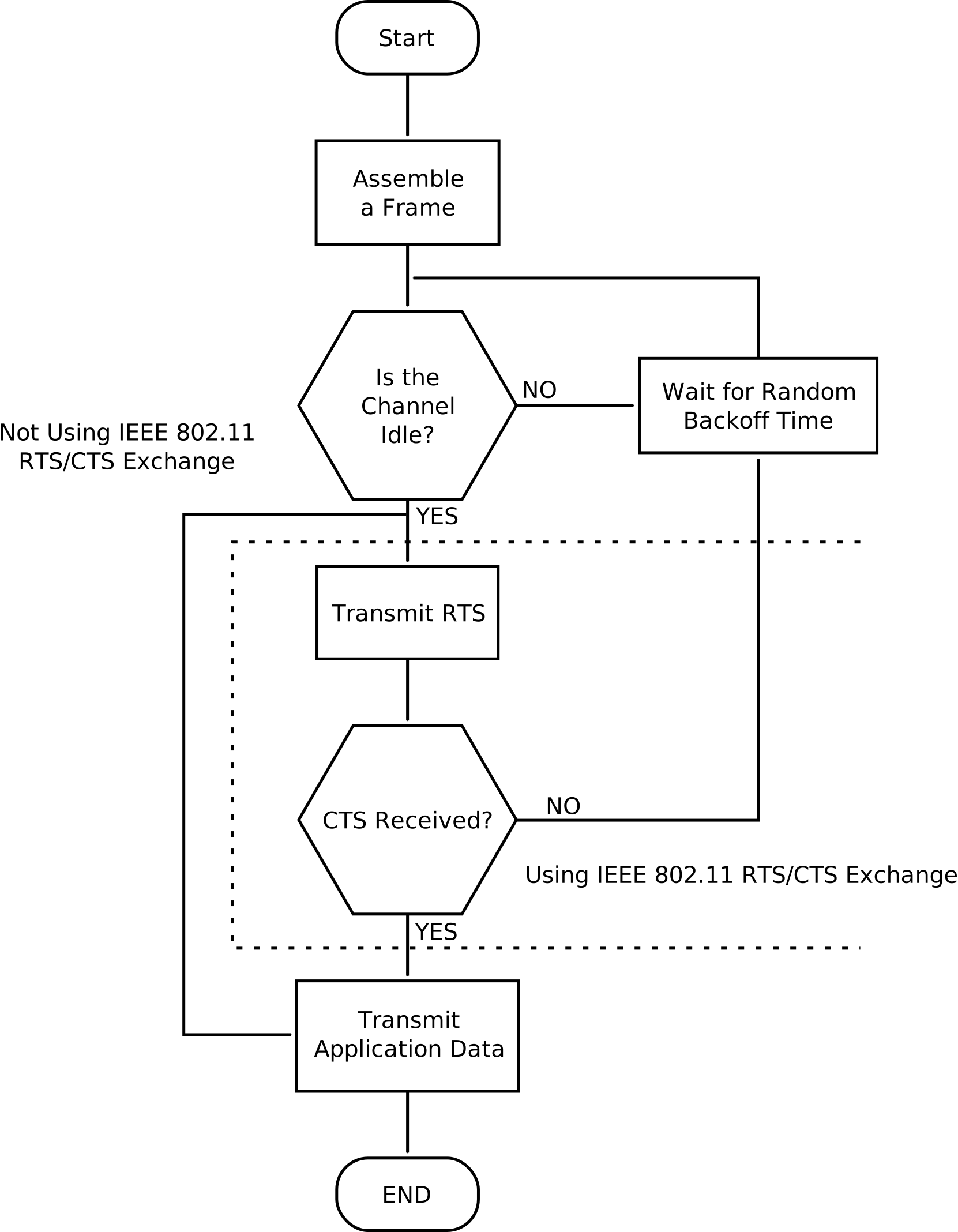
* CSMA/CA: sense, back off, transmit, ACK. — jjgarcia.tsc, Attribution, via Wikimedia Commons. *
Why CSMA/CD (Ethernet) doesn't work for wireless:
- On Ethernet, a device can send and listen simultaneously → detect collisions in real-time
- On wireless, the transmitter's own signal drowns out all other signals → collision detection is physically impossible
- Also: the "hidden node" problem — two clients may not hear each other but both reach the AP
CSMA/CA process (step by step):
- Listen: Client checks if the channel is idle (no current traffic)
- RTS: Client sends a "Ready To Send" frame to the AP, requesting dedicated channel access
- CTS: AP responds with "Clear To Send," granting exclusive access (all other clients hear this and wait)
- Wait: If no CTS received, client waits a random backoff time and retries
- Transmit: Client sends its data frame
- ACK: AP acknowledges receipt. If no ACK → client assumes a collision occurred and restarts
Key difference from CSMA/CD:
- CSMA/CD: Transmit first, detect collisions during transmission, retransmit if collision detected
- CSMA/CA: Request permission first (RTS/CTS), avoid collisions before they happen, then transmit
Tip: CSMA/CA is slower than CSMA/CD because of the RTS/CTS overhead — this is one reason why Wi-Fi is always slower than wired Ethernet at the same data rate.
Go deeper:
 CSMA/CA (Wikipedia) — why wireless transmitters can't detect collisions, the hidden-node problem, and RTS/CTS.