Why does a firewall decrypt traffic in both directions — what two distinct threats does breaking open TLS address?
Decryption lets the firewall stop malicious encrypted content from getting in, and stop sensitive data from leaking out in encrypted form.
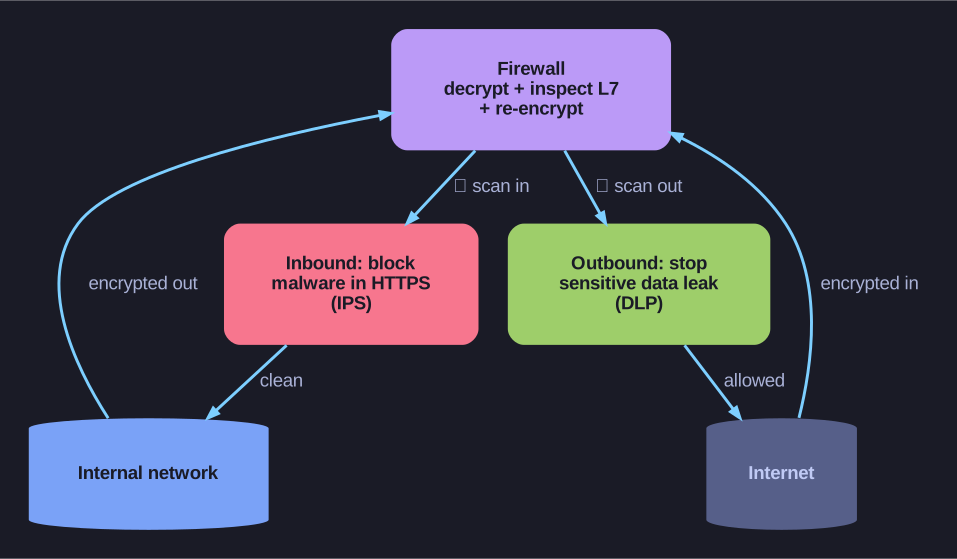
* Decrypt-to-inspect cuts both ways: IPS in, DLP out. *
Most advanced NextGen-firewall features (URL filtering, malware scanning, App-ID, content inspection) need to read traffic up to OSI Layer 7. Encrypted connections are opaque, so they must be made inspectable first. Once decrypted, policy works in two directions:
- Inbound protection: block malicious encrypted content (malware in an HTTPS download, an exploit hidden in a TLS session) before it enters the network.
- Outbound / data-loss protection: ensure sensitive information cannot leave the network hidden inside encryption — the firewall can now see and stop it.
The MITM parallel: what the firewall does here is comparable to a man-in-the-middle attack — traffic is intercepted, read, and forwarded. The difference is ownership and intent.
Tip: "Decrypt to inspect" cuts both ways: keep bad stuff out, keep secret stuff in.
Go deeper:
 Data loss prevention software (Wikipedia) — the outbound half: detecting sensitive data leaving the network.
- Next-generation firewall (Wikipedia) — the inbound half: inline DPI/IPS that only works once TLS is opened.