Why is "dissent as a teaching goal" a paradox — what happens to disagreement once it's something you're expected to produce?
If contradicting the teacher is the assigned goal, then contradicting becomes obedience — the dissent stops being real dissent and turns into compliance with the instruction to dissent.
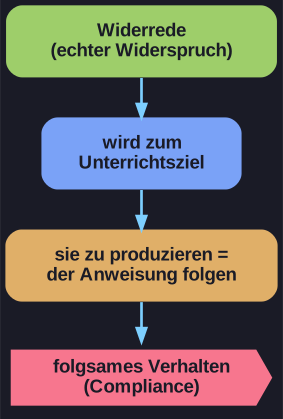
* Once dissent becomes the instruction, producing it is obeying — real Widerrede flips into folgsames Verhalten. *
The trap is structural. Genuine critical thinking shows up as Widerrede (dissent, talking back) — a learner challenging an authority on the merits. But the moment an institution makes "show me you can disagree" the explicit objective:
- Disagreeing is now what you were told to do, so producing it is folgsames Verhalten (compliant behaviour), not independence.
- The act looks identical from the outside, yet its meaning has flipped: it satisfies the authority rather than resisting it.
- You can't reliably tell performed dissent from real dissent, because the incentive now rewards the performance.
So "be critical because I'm grading you on it" quietly converts the very thing it asks for into its opposite. This is why critical thinking can't be fully commanded — only invited and made safe.
Tip: The tell is the reward structure. If disagreeing earns you marks or approval, ask whether you'd still hold the view when there's nothing to gain — that's the line between independent judgement and compliance dressed as rebellion.
Go deeper:
 Performative contradiction — the exact logical shape here: the act of obeying "be a dissenter" undercuts the dissent it's supposed to demonstrate.