Why is it especially hard to apply critical thinking to the output of generative AI (like ChatGPT)?
Because the output usually looks logical, fluent and plausible — that surface confidence is exactly what disarms scrutiny, even when the content is wrong.
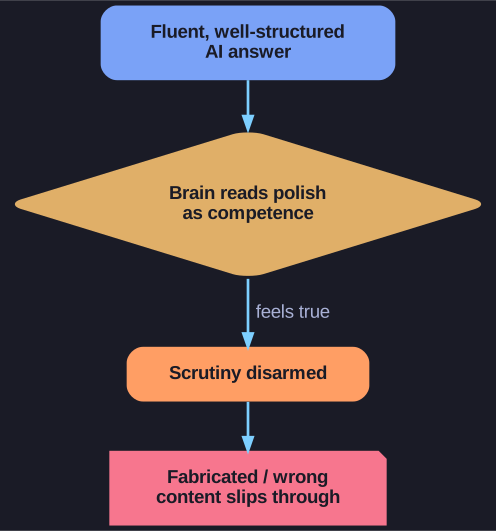
* The trap: polish reads as competence, so scrutiny drops just when a fabricated answer needs it most. *
The standard advice — "always question what AI tools give you" — is easy to say and hard to do. The difficulty is built into how generative AI ("GenKI" — generative künstliche Intelligenz) presents itself:
- The answers are fluent and well-structured, which our brains read as a signal of competence and truth.
- They sound plausible even when they're fabricated ("hallucinated"), so there's no obvious seam to catch.
- The harder problem is how to question them: by what method do you check a confident, coherent paragraph when you may not know the topic well enough to spot the error?
So plausibility is the trap: the more convincing the presentation, the less likely we are to do the work of verifying it — the opposite of what good reasoning requires.
Tip: Treat fluency as zero evidence of accuracy. A confident, well-written wrong answer is more dangerous than an obviously clumsy one, precisely because it doesn't trigger suspicion.
Go deeper:
 Wikipedia — Hallucination (artificial intelligence) — why language models state fabricated things as confident fact, with examples.