Why is whitelisting the most secure input validation approach?
Because it rejects everything by default — anything not explicitly known-good is denied, so unknown and novel attacks are blocked without having to predict them.
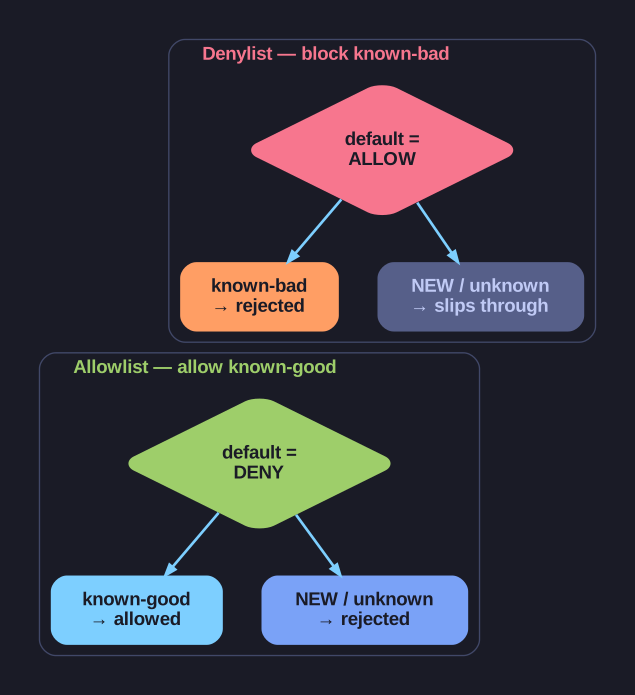
* Denylist defaults to allow, so novel attacks slip through; an allowlist defaults to deny, so anything not known-good is rejected automatically. *
This is the crucial difference from blacklisting. A blacklist tries to enumerate every bad input and permits whatever it didn't think of, so a new bypass slips through; a whitelist denies whatever it didn't approve, so a new bypass is rejected automatically. The default answer flips from "allow" to "deny."
Whitelisting (allowlisting) implementation methods:
- Data type validators - Ensure correct type (int, date, etc.)
- RegEx - Pattern matching (use with care: OWASP ReDoS risk)
- Explicit whitelists - Enumerate allowed values
- Schema validation - XML/JSON schema enforcement
Why more secure than blacklisting:
| Approach | Strategy | Weakness |
|---|---|---|
| Blacklisting | Block known-bad patterns | Incomplete — attackers find new bypasses |
| Whitelisting | Allow only known-good | Rejects everything unknown — secure by default |
Tip: Blacklists play catch-up forever. Whitelists are secure from day one because unknown input is rejected by default.
Go deeper:
 OWASP Input Validation Cheat Sheet — allowlist vs denylist and the deny-by-default rationale.
- OWASP — Regular expression Denial of Service (ReDoS) — why an allowlist regex can itself become the vulnerability.