Question
In Harry Frankfurt's analysis, what precisely is "bullshit" — and what is its single defining feature?
Answer
Speech produced with no concern for whether it is true or false — the bullshitter is indifferent to the truth, neither trying to state it nor to hide it.
The philosopher Harry Frankfurt turned the everyday swear-word into a technical concept in his essay On Bullshit. His core claim: the defining feature of bullshit is not falsity but a lack of connection to truth. The bullshitter:
- misrepresents what they are up to — they pose as someone trying to describe reality, but aren't.
- has no interest in the truth-value of what they say — getting it right or wrong simply isn't the point.
- is not convinced their claims are correct (nor that they're false).
- bends reality to fit their own purpose, picking or inventing whatever suits the goal.
The classic example is the politician or the Fourth-of-July orator who speaks grandly about "our great and blessed nation": they don't care whether the audience forms true beliefs about history — they care how the audience sees them.
Tip: Bullshit can even be accidentally true. What makes it bullshit is the speaker's indifference, not the accuracy of the words.
Go deeper:
 On Bullshit (Harry Frankfurt) — the essay that turned the swear-word into a technical concept.
Note saved — thanks!
Question
How does bullshit differ from lying and from telling the truth?
Answer
The truth-teller and the liar both care about the truth (one serves it, one hides it); the bullshitter ignores it entirely.
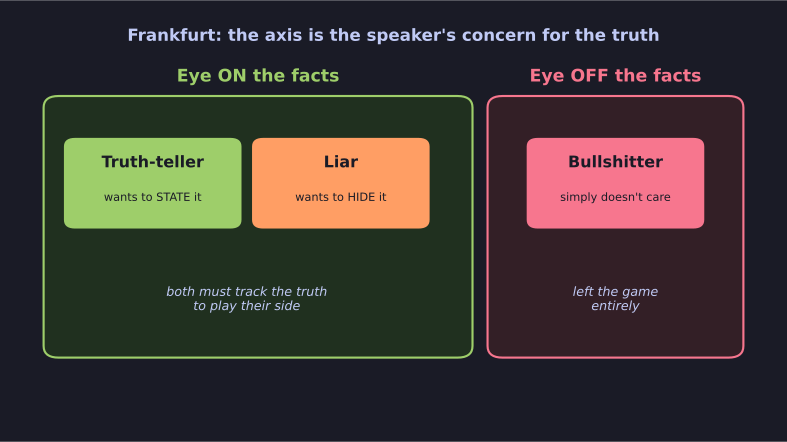
* Truth-teller, liar and bullshitter, placed by their concern for the truth. *
Frankfurt's three-way contrast turns on one axis — the speaker's relationship to the truth:
| Speaker | Relationship to truth | What they aim to do |
|---|---|---|
| Truth-teller | Believes the statement is true | Describe reality correctly |
| Liar | Believes it is false | Lead you away from a truth they know |
| Bullshitter | Doesn't care either way | Get away with saying whatever suits them |
The liar and the truth-teller are "playing on opposite sides of the same game": both keep their eye on the facts, because you can only deliberately conceal a truth you yourself recognise. The bullshitter has left the game — their eye is "not on the facts at all." That's why a liar must know the truth to lie well, but a bullshitter needs no such conviction.
Tip: A useful test — could the speaker still say this if they had no idea whether it was true? If yes, it leans toward bullshit.
Note saved — thanks!