A plain hash value detects accidental corruption — so why does it fail against a malicious attacker like Mallroy sitting in the middle?
Because the hash isn't secret: Mallroy can swap the file AND recompute a matching hash, so Bob's check still passes.
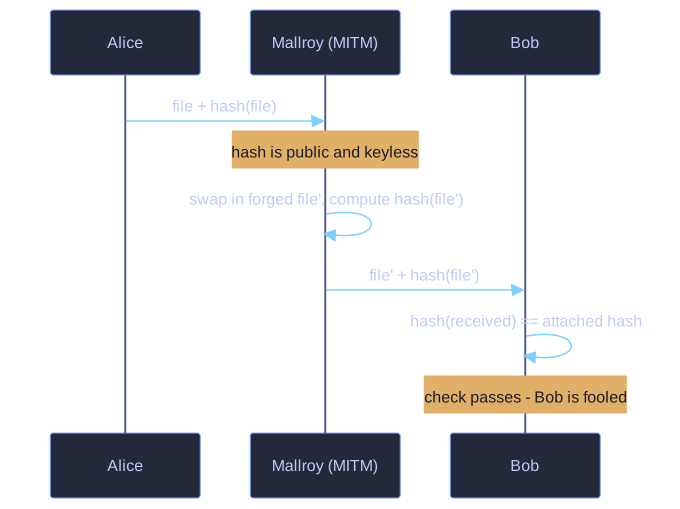
* The hash is public and keyless, so Mallroy forges the file and its hash together — Bob's check still passes. *
The hash function is public. So a man-in-the-middle can:
- Intercept Alice's file + hash.
- Replace the file with a forged one.
- Compute the hash of the forged file and attach that.
Bob hashes what he receives, it matches the (fake) hash, and he's fooled. A bare hash protects against noise and accidents, never against an adversary who controls the channel.
The fix: mix in something the attacker doesn't have — a secret key (→ MAC) or a private key (→ digital signature). That's the whole reason MACs and signatures exist.
Tip: Hash alone = integrity vs. errors. Add a secret = integrity vs. attackers.
Go deeper:
 Man-in-the-middle attack (Wikipedia) — how an attacker who controls the channel relays and alters messages.