Across the operating theatre and the military, what is the single recurring resolution to "how can a command-driven domain still value critical thinking"?
Separate the phases: do the rigorous thinking before (design, legitimise, peer-review) and after (debrief, review, report) the crisis, and execute a pre-legitimised plan decisively during it.
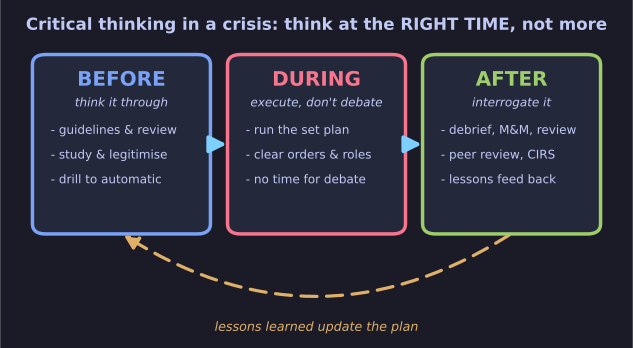
* The recurring resolution: think it through before, execute decisively during, interrogate it after — and the review feeds lessons back into the plan. *
Every example — bleeding surgery, weapons drill, resuscitation, military order — resolves the same apparent contradiction the same way:
- Before: guidelines, peer review, study, discussion, legitimisation and training do the heavy reasoning, and drill makes the response automatic.
- During: execute without debate — clear orders, defined roles, no time lost — because deliberation now costs lives and fragments action.
- After: debriefing, M&M, case discussions, peer review and CIRS pull every observation into a structured loop that improves the procedure.
Supporting this are Speak-up (a protected exception so hierarchy never buries a safety concern), the Circle of Control (question what you can change), and the timing principle Beobachten – Anmerken (note now, raise at the right moment).
Tip: The headline insight: in a crisis you don't think more, you think at the right time. The discipline is knowing which phase you're in and behaving accordingly.
Go deeper:
 Wikipedia — High reliability organization — the umbrella idea tying the whole topic together: staying safe and self-critical under high risk.