Beyond simply "not knowing," what kinds of ignorance does the topic distinguish — and why does that matter for handling information?
Ignorance isn't only an empty gap; it can be wanted, or deliberately manufactured — "not knowing," "not wanting to know," and "not wanting others to know."
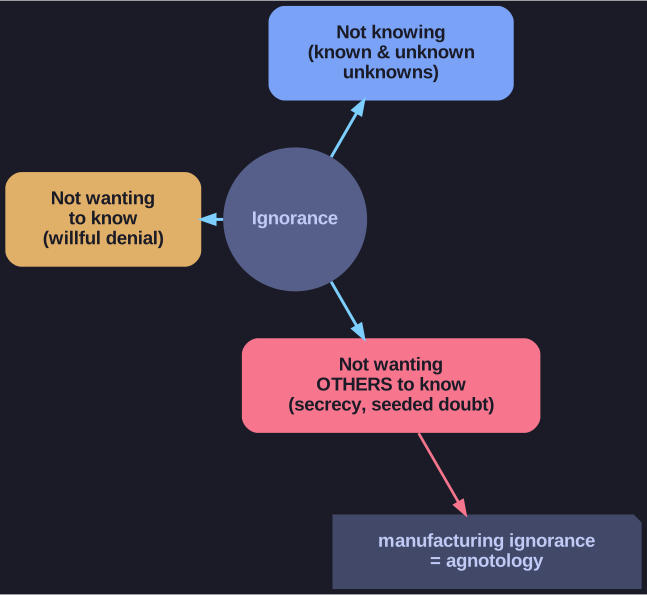
* Three kinds of ignorance; the manufactured kind is studied as agnotology. *
Drawing on Peter Burke's history of ignorance, the material splits ignorance into three kinds that behave very differently:
- Not knowing — the plain absence of knowledge. This includes known unknowns (you know there's a gap) and unknown unknowns (you don't even know what you're missing).
- Not wanting to know — willful ignorance: averting your eyes, refusing inconvenient facts (e.g. denial of well-evidenced realities).
- Not wanting others to know — secrecy and the active production of ignorance: disinformation, obfuscation, manufactured doubt.
That third kind is the dangerous one for information hygiene: the deliberate study and engineering of ignorance is called agnotology. Famously, industries seeded doubt about smoking and climate harm not by lying outright but by flooding the field with confusion — manufacturing ignorance.
Tip: A surprising number of bad-information problems aren't accidental gaps but engineered ones. Ask not just "what don't I know?" but "does someone benefit from my not knowing?"
Go deeper:
 Agnotology — the study of manufactured ignorance, from tobacco to climate doubt.