How do the CALL and RET instructions work?
CALL pushes the return address (the address of the next instruction) onto the stack and jumps to the function; RET pops that address back into %rip and resumes there.
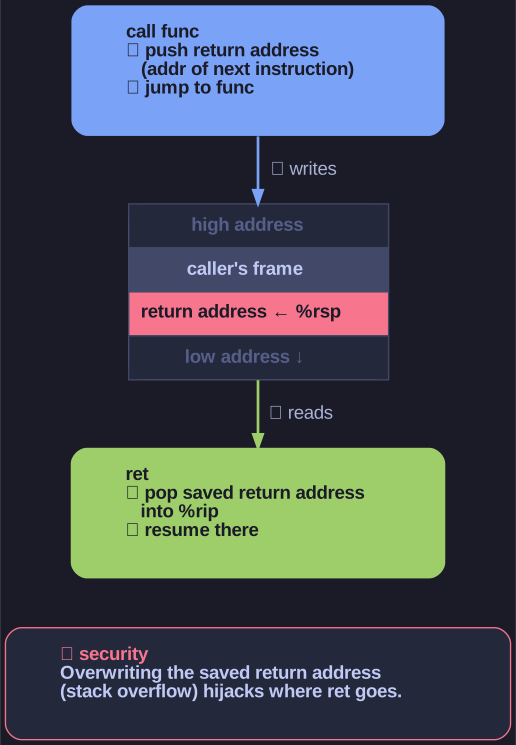
* call pushes the return address then jumps; ret pops that saved address into %rip and resumes — overwriting it on the stack hijacks control flow. *
Together they implement the function-call/return mechanism using the stack to remember "where to come back to."
call label does two things:
- Push the address of the following instruction (
push %rip) - Jump to
label
ret undoes it:
- Pop the saved return address into
%rip - Continue executing from there
0x4004e5:  callq 0x4004b6    # push 0x4004ea, jump to sumto
0x4004ea:  addq  $5, %rax    # execution resumes here after ret
           ...
0x4004b6 <sumto>:
           ...
0x4004d4:  retq              # pop 0x4004ea into %rip, jump back
The stack is what makes this work for nested and recursive calls: each call pushes its own return address, and the matching ret pops the most recent one — a perfect LIFO chain back through the callers.
Security note: because the return address sits on the stack, overwriting it (a stack buffer overflow) hijacks ret — the basis of classic control-flow exploits.
Go deeper:
 Felix Cloutier — CALL — CALL pushing the return address.
- Felix Cloutier — RET — RET popping the return address back into the instruction pointer.