Quiz Entry - updated: 2026.07.30
How do you recognize a pointer dereference chain (e.g., p->next->value) in assembly?
Look for back-to-back memory reads where the value loaded by the first becomes the base register of the second — each such step is one more -> in the chain.
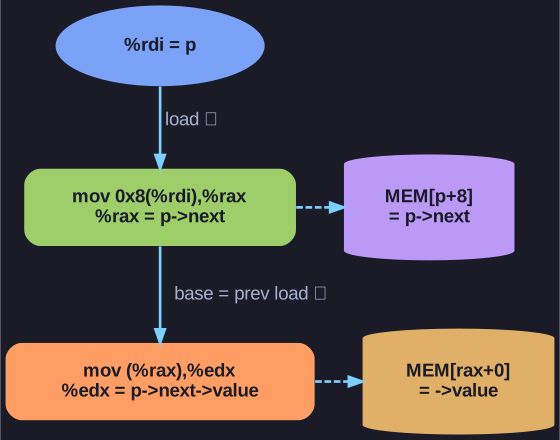
* Back-to-back loads where the value from one becomes the base register of the next — each step is one more ->. *
# rax = p->next (read pointer from offset 8)
mov  0x8(%rdi), %rax

# edx = p->next->value (read int from offset 0 of what we just loaded)
mov  (%rax), %edx
This is p->next->value: first dereference gets the next pointer, second dereference reads the value field from that node.
Triple dereference (p->next->next->value):
mov  0x8(%rdi), %rax
mov  0x8(%rax), %rax
mov  (%rax), %edx
How to identify: Each mov that loads from (result_of_previous_load) is another pointer follow. Count them to determine the depth of the dereference chain.
Common contexts:
- Linked list traversal:
node->next->next - Tree navigation:
node->left->right - Struct with pointer fields:
obj->ref->data
Go deeper:
