Quiz Entry - updated: 2026.07.30
How do you recognize that a function is saving multiple callee-saved registers and what does it tell you?
The count of push instructions in the prologue (mirrored by pops at the end) tells you how many callee-saved registers — and thus long-lived local values — the function needs.
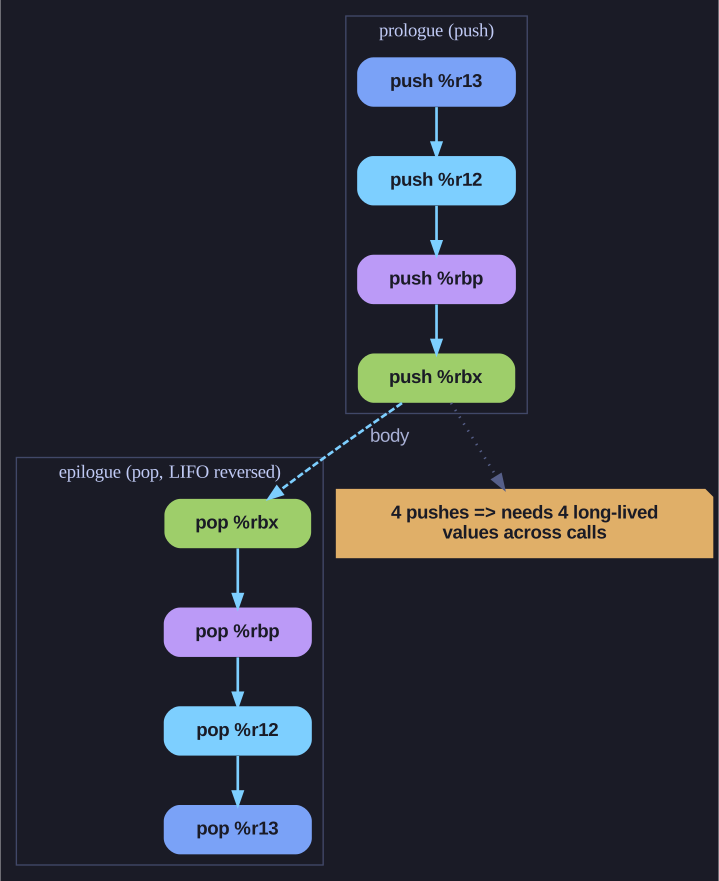
* A stack of prologue pushes, popped in reversed LIFO order at exit; the count is how many values the function keeps alive across calls. *
my_func:
    push %r13
    push %r12
    push %rbp
    push %rbx
    sub  $0x8, %rsp
    ...
    add  $0x8, %rsp
    pop  %rbx
    pop  %rbp
    pop  %r12
    pop  %r13
    ret
What this tells you:
- The function uses 4 callee-saved registers (
%rbx,%rbp,%r12,%r13) - It needs 4 values to survive across internal function calls
- The
sub $0x8, %rspis for 16-byte stack alignment (4 pushes = 32 bytes, + 8 fromcall= 40, + 8 padding = 48 = aligned)
Pop order is reversed: Stack is LIFO, so push %r13 first → pop %r13 last.
Rule of thumb:
- 0 pushes = simple leaf function (calls nothing, or doesn't need values to survive)
- 1-2 pushes = moderate function with a few calls
- 3-4+ pushes = complex function with many calls and local state
Go deeper:
