In the model "data → facts → interpretations," what does each stage mean and how do they build on each other?
Data are raw observations of the world; facts are statements selected and condensed from data; interpretations read those facts toward a communicative purpose. Each step adds human choice.
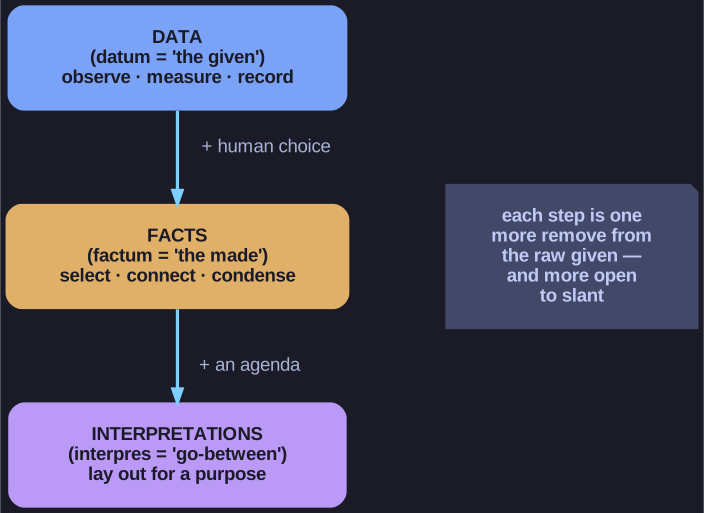
* From the given, to the made, to the mediated — each step adds human choice. *
The Latin roots tell the story of increasing human shaping:
- Data — datum, "the given." You observe, measure, record. The raw material, taken as given from the objective world.
- Facts — factum, "the made." You select, connect, and condense data into statements. Already a human construction: you chose which data, how to combine them.
- Interpretations — interpres, "the mediator/go-between." You lay the facts out for a communicative intent — to argue, persuade, frame.
The crucial insight is that even "the facts" are made, not simply found, and interpretation sits on top of that with an explicit agenda. Each upward step is more removed from the raw given and more open to slant — which is exactly where manipulation hides.
Tip: When someone says "the facts speak for themselves," remember the facts were already selected and condensed from data by someone with a purpose.