Quiz Entry - updated: 2026.07.30
What are the three LACP modes, and which combinations form an EtherChannel?
On (forced, no negotiation), Active (actively initiates), and Passive (passively waits). At least one side must be Active for LACP (Link Aggregation Control Protocol) negotiation to work.
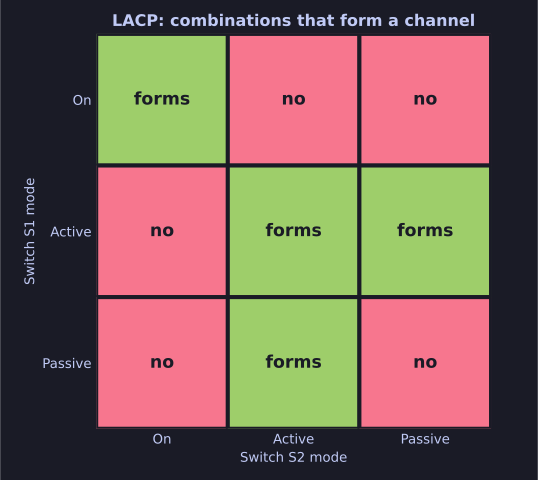
* LACP mode combinations. *
LACP modes:
- On — forces the channel without LACP negotiation. No LACP packets exchanged.
- Active — actively sends LACP packets to initiate negotiation
- Passive — passively waits; responds to LACP packets but never initiates
Mode combinations:
| S1 | S2 | Channel Forms? |
|---|---|---|
| On | On | Yes (no negotiation) |
| On | Active/Passive | No (on doesn't negotiate) |
| Active | Active | Yes |
| Active | Passive | Yes |
| Passive | Passive | No (neither initiates) |
LACP vs. PAgP (Port Aggregation Protocol) — the pattern is identical:
| PAgP | LACP | Role |
|---|---|---|
| Desirable | Active | Initiates negotiation |
| Auto | Passive | Waits for negotiation |
| On | On | Forces without protocol |
Tip: The logic is the same for both protocols — just the mode names differ. "Two passives never form a channel" applies to both.
Go deeper:
 EtherChannels with LACP (Network Direction) — covers active vs. passive and states plainly that passive+passive never forms a channel.